
What are You Remembering Lately?
This smorgasbord is all about memory. Bob Weir, Aloka the Peace Dog, purple lupines and melodies we can't forget...

We have a little tradition here at Juke. Every three months, I write to all our contributors with a question and then I publish all their answers together in one big mashup, or smorgasbord, as I like to call it. Last time, in October, the question was “What should I read next?” Generally, I like to ask open-ended questions, with the hope that each contributor will take it wherever they’d like to go. For today’s Smorgasbord, I was looking for a taste of time travel. I asked each of our contributors to share a memory with me, to describe something from the past that has been nagging at them or a twig caught in their stream. The replies, of course, were just as fascinating as I’d hoped they would be. Some are heartbreaking, some disturbing, some poignant or funny or sweet.
Once you’ve read each of the answers, I hope you’ll be inspired to jump into the comments and share your own thoughts.
What are you remembering lately?
I’ll begin…
Tonya Morton:
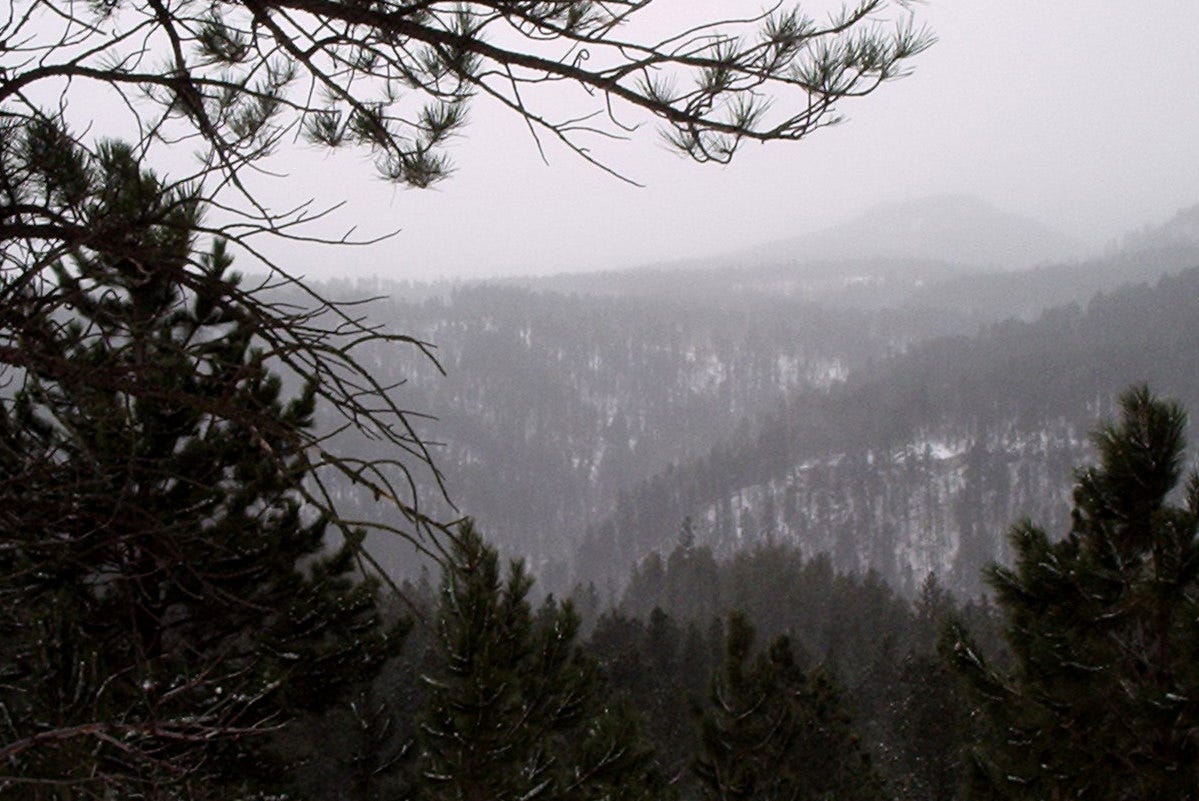
Lately, I am remembering quiet. All those hours I spent as a kid roaming through the forest with only the sound of wind and birds around me, the soft rustle of pine needles underfoot. I have felt a bit overwhelmed lately. Like we all have, I guess. The horrible news of each day. The sharply felt losses. The fear. And then, among all that greater anxiety, Paul and I are trying to sort out our living situation. We’re debating whether it’s smarter to sell or rent our current apartment. Debating whether to rent or to buy a new place. It’s been a long, tedious conversation, and it’s unlikely to end for at least a few more months.
The not knowing is what’s hard. It may be the hardest feeling for me to handle, day to day. Not feeling certain of where my home is, combined with the larger sense of not knowing what, if anything, can be reclaimed or rebuilt from the broader wreckage around us. My thoughts start to spin and they can chase themselves for hours. To soothe myself, I remember the quiet.
Snow falling thickly outside the living room windows all day. That gray, thin light. The smell of woodsmoke. I will never cease feeling grateful for the home in the Black Hills where I was raised. Even though I rebelled against all the quiet back then and longed for the bustle of a larger world. Now that I live at the heart of the bustle, (and yes, I would still choose it,) I am relieved to find I can still return my mind to that clearing the woods when it needs rest.
I remember the days we spent picking chokecherries, and I remember the heat of the kitchen afterwards as my father stirred the pots of jam. Walking myself to exhaustion along the paths over the cliffs. And how the forest floor emerged from beneath the snow each spring and blossomed with purple lupines...
Paul Vlachos:
First off - I would be lying if I did not say the thing I remember most often is what life was like when we, as a country, agreed on basic facts and could debate them without resorting so slurs and accusations. I truly miss that and often wonder how one gets out of a death spiral in civility, communication and reality. I’ll leave it at that on Juke, though, and continue to rant on my own communication channels.
Second - I’m not remembering much of anything, as I have tried for years to be in the moment and not swim in a sea of nostalgia. Perhaps that’s not true. It’s impossible to completely tamp down memory. I often need to sort through photos - mainly because most of my many thousands of photos are not tagged or indexed in a logical way. When I do have to sort through old photos, the memories come back in a rush. I cherish them, although they often make me sad, as well.
Sad for a past that is definitively gone. I cannot go home again, “home” meaning my youth, my childhood house and even that mindset. And that’s fine. At the risk of devolving into utter cornball, I had a lightbulb moment six months ago - and I have had this moment at other times over the years - that THESE are the “good old days.” Truly and absolutely. It’s that thing of imagining what it would be like to look back on this moment.
So I try to stay with that because it makes the now much more tolerable, pleasant, and interesting. So, I guess what I’m saying is that I’m trying to remember what I just did. Wait, that sounds bad. I’m trying to be in the moment. It always comes back to that. I open a book sometimes and smell the paper and, if it’s a well-printed book, I get a swoosh of remembrance - hot summer days in a hammock, long winter nights under a lightbulb - reading books.
I ride my bike and remember how the wind felt on my face while riding as a teen. I get to the desert and think of how the desert first felt when I got there in my early 30s. I bite a pizza and, well, you get the point. Although this brings up a funny thing about memory. When I had my first case of Covid, I lost my sense of smell and taste. It was real and truly awful. Food had lost all joy. When I got a piece of pizza, though, despite not being able to smell or taste it, the first bite activated something in my head and my memory of past pizzas somehow kicked in.
I still did not taste it, but I was able to enjoy it, based on some stored neural data. does that make sense? Does it matter? I think a piece on memory might be in the future. Not “remembering,” although that’s good, too.
Tabby Ivy:
At this very minute? Mariah Carey singing “All I Want for Christmas Is You”!
It’s Dec 20 as I write this, and I’ve heard it so much this Holiday season it’s become an ear worm I wake up to in the morning!
But that is not what I want to share. What I want to share is a moment in time that is frozen in my memory. It also has to do with a song. This memory comes in and out of my consciousness at strange times, especially when the song plays on the radio which doesn’t happen much these days. The memory is of a time with my father. I was probably around twelve years old which would make this 1960 - April,1960 to be specific. We are driving in the car after mailing his tax return at the central post office in Los Angeles. I guess he wanted to make sure the documents were post-marked by April 15. We are on the I-10 freeway driving home on a warm Southern California afternoon. We are on a sweeping freeway interchange as we leave downtown LA. It is just me and my Dad in the car, I am in the front seat with the window down. I can feel the wind, I can feel the sun. I am with my dad and the song, “Because They’re Young”, by Duane Eddy & the Rebels comes on. I feel happy, smiling inside. I tell my twelve year-old self, “remember this, this is just the most perfect moment.” And I have remembered it, felt it - the curve of the road, the song, the wind, the sun, my dad - for all the sixty-five years since.
Some background is needed.
My dad and I were not close, he was an emotionally distant man, not a loving father and probably suffered from depression, as well. He was a traveling salesman, gone every month for up to two or three weeks at a time. We seldom spent time together, but this day was different. My Mom probably told him, “Why don’t you take Tabby with you, have some together-time with her.” I don’t remember him talking much that day in the car, I didn’t say anything either - didn’t share how happy I was, didn’t share that I never wanted to forget this moment.
That probably says all you need to know about me, and my relationship with my father.
Three years later he was found dead in a San Francisco hotel room. I was fifteen. He died in his sleep from a heart attack at the age of forty-three during a business trip. Gone without saying good-bye. Gone before I had a chance to tell him how I felt that moment in the car with him listening to Duane Eddy & The Rebels.
Ned Mudd:
I'm remembering meeting Aloka the Peace Dog on a two lane blacktop in rural Georgia, under a slate gray December sky. Seeing a line of Buddhist monks rounding the corner, people lining the road, cheering. A chill running up my spine.
Sue Cauhape:
I’ve been obsessed with a story idea ... half-written already ... that I can’t rid from my brain. It circles around, pulling up images and experiences that fill me with dread, not only for our country but for my personal welfare. I live in a ranching community that is quickly filling with people from all over the place ... mainly California. Because of this, the former sundowner cowboys and Indians social and political mentality is being challenged. Many from California are seeking freedom from that state’s draconian regulations as well as what appears to these folks as communist tendencies. Thus, as a non-partisan Centrist, I get called a socialist a lot. (Cowboys and Indians usually mind their own damned business.) When the Republican Women’s group decorated a Christmas tree in the history museum with photos of Trump, I couldn’t let that go without a Letter to the Editor. I was firmly denounced as specious and prejudiced by the “chaplain” of that group. She’s also a frequent LtoEd contributor as well. This last experience has pulled up many experiences that inspire me to write “MAGA Mayberry.” After writing half of the article, I felt like I would be shoveling more manure on the mental health condition of our country as well as poisoning myself with obsessive thoughts. I’ve already become more reclusive because of my unease with locals. For some ridiculous reason, I feel Walmart is the friendliest and safest place in town, whereas I’ve had run-ins with customers at other stores. So, my question to Juke readers is, should I inflict “MAGA Mayberry” on the Internet or allow us all a respite from yet another political diatribe?
Anthony Head:
Remembering Bobby Weir
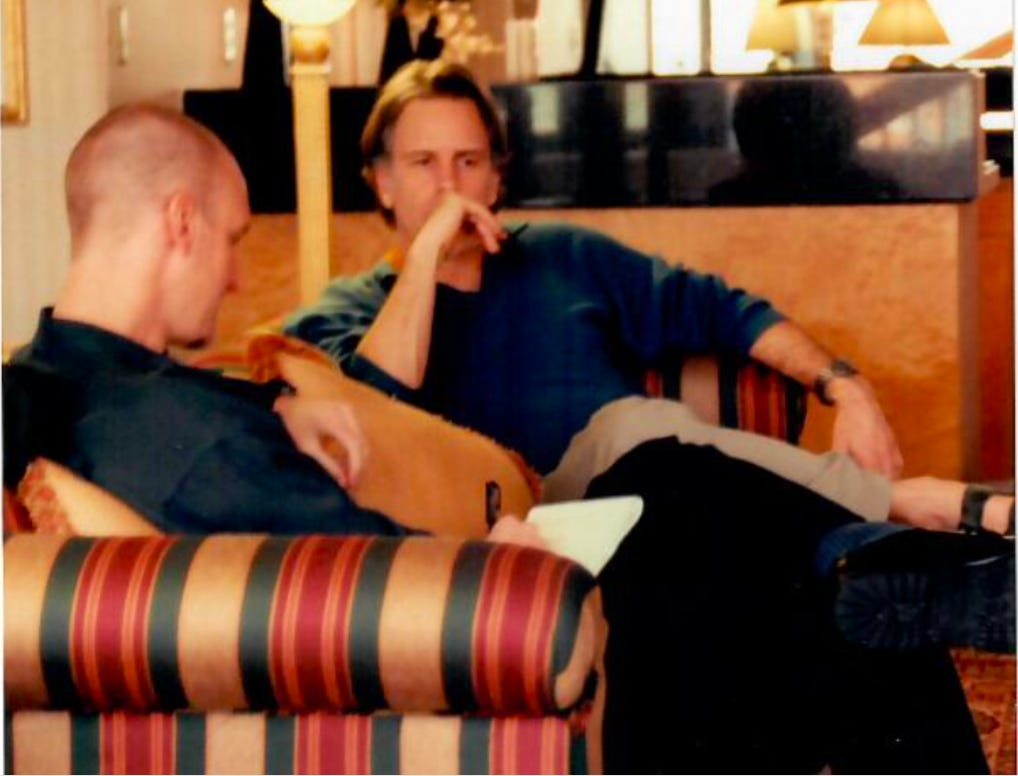
I can’t remember what I called him when we first shook hands. It’s possible I said “Mr. Weir”. Dennis McNally, the Grateful Dead’s publicist, told me beforehand that it was fine to call him “Bobby,” but I just don’t think I had the stones back then to call him Bobby; it would have felt overly familiar in my mouth and so it’s quite possible I never directly addressed him by any name.
What I do remember on that brisk San Francisco afternoon in early 2001 is that Bob Weir (which is how I later referred to him in print for both publications I’d been working for) was forthright and charming and everything that I needed him to be that day.
Today I realize how selfish I had been. But then, I felt the charge and sizzle and eager abandon that comes with rare opportunities. Only after I let him know that I had finished asking my questions for both publications, thereby releasing Bob Weir of any professional courtesy to talk further with me, only then did I let him know that I was a big fan of the band. I thanked him for all the music he and the Grateful Dead had given the world.
He good-naturedly nodded, briefly averting his eyes. He had gorgeous dark eyes. We spoke in broad strokes about the Dead, his band RatDog, and of music in general. We talked about how the death of Jerry Garcia still resonated with so many people six years later. He likely knew he was talking with someone familiar enough with the band to express sincere feelings of lingering sadness.
I knew perfectly well that few people in the world had been closer to Jerry Garcia than Bob Weir. He’d been hearing of grief for six years and I was probably the fifth or fifteenth person that day to pour more on him. He was okay with it. He made no move to leave. We kept talking.
The last thing I asked was (I still believe) the hardest question I ever asked anyone under any professional circumstances, which we technically were still working within. I asked Bob Weir if there had been some amount of relief suddenly appear in his life when Jerry died.
He was a wise man and understood what I’d ineloquently tried to ask. There were few people in the world who had dealt more directly with Jerry Garcia’s losing battle with heroine than Bob Weir. He remarked that it was an unusually difficult question to answer.
I remember that he stared in the distance for a long moment, silently, but I couldn’t begin to speculate what he was thinking through. He asked if I was going to be at his RatDog show that evening. I had tickets and press passes. He told me he would have an answer when he saw me later.
We did see each other briefly before the show. Maybe he had the answer, but neither of us returned to the question. I remember he played a great show that night.
Rebekah Wilkins-Pepiton:
Nine Memories...
Incense pouring from an alley temple in Hong Kong...Daily trips to the cacophonous market where a dentist, tinkerer, cobbler and fruit seller shared a market stall…Chicken feet in a plastic bag.
Ginkgo leaves in the unlikely snow falling south of the Yang Si River...Speeding away from a band of bachelor macaques at kilometer 0...A birthday banquet among strangers…Truly terrible beer in tiny plastic cups that tasted amazing with Szechuan hotpot…A standing ovation from students as I walked into my afternoon class with my hair up…Making blackberry cobbler for pilgrims on the Kawa Karpo Kora.
Rebekah Wilkins-Pepiton served as a US Peace Corps volunteer in China (2010-12).
Constance Christopher:
On January 2nd, 2025, a stent in my bile duct was placed to allow gallstones to pass through the colon and finally out. I had no idea what happens next. Maybe someone sees a little stone somewhere, anywhere, and thinks, “Look at that. I’ve found a pearl,” and picks it up. I don’t know what gallstones look like, or how large or small they can be. I know that when one is stuck inside you, pain becomes a significant issue, and while waiting for the pain to subside, one might discover the opposite occurs.
In the middle of the night, after New Year’s Eve, a kindly taxi driver might deliver you to the hospital, while listening to the sounds of groaning for sixty city blocks. In his rearview mirror, he sees someone writhing, unable to be still, like a child unwillingly stuck in a high chair. He lets you and your spouse out on the curb of a walkway that seems five blocks long, but is not. Supposedly there is help behind the door at its end with soft red lights spelling ER. You want to believe that many ready learned personnel in scrubs, and a nun for good luck, are raring to attend to you and no one else, because now the quiet moaning is anything but, and because the doctor who put the stent in has phoned ahead to ensure you are cared for until he arrives. Instead, you find a hundred other patients, some on gurneys, or in wheel chairs, and countless others in rows of chairs, some unhoused as is the custom when it’s less than 20 degrees outside. There are people standing, or crouched against walls. You are clearly desperate so a wheel chair is found for you. Your spouse stands guard, insisting to passing nurses that you get care.
I squirm and moan, unaware that my spouse has captured a nurse who takes a moment to listen to him. She’s assures him that help is on the way, because she believes “acute pancreatitis” will be confirmed as soon as a doctor can see me. Thirty hours later, I am admitted when a bed opens up. I spend 8 days attached to a pole hung with 8 bags of fluid with tiny dancing letters. Morphine is given through a tube in one. Almost Christmassy. Soon, I am certain it is Santa visiting me every 3 hours to take blood or for a test. My arms have deep purple blossoms springing tubes patched with blotched gause. The moaning gone, I cannot sleep, interrupted so often. I lie alone in between my spouse’s visits, and watch the glittering skyscrapers night and day, millions of windows reflecting stars and swift moving clouds. I have my own room. Groups of surgeons visit, openly pondering what to do. And every nurse in the hospital visits, each regaling lucky me. “Oh, what a beautiful view,” they say. Inside, I scream.
Matt Layne:
Originally, I had planned to talk about new years and new beginnings and how crazy and out of control so many things feel right now, but instead I want to talk about the recent death of Grateful Dead guitarist and singer, Bob Weir.
I’m 56, so my journey with the Grateful Dead didn’t start until 1988. My friend, Andrew, picked me up in his little Nissan Sentra, and we drove from Birmingham to Dallas. We smoked some along the way, and I mainly recall a winding ridiculous conversation that sprouted from the roots of that weed about the repeated incarceration of Otis on The Andy Griffith show and the satisfying slide and click of one Grateful Dead show after another being inserted into the cassette player.
We did not arrive at the parking lot outside of the Reunion Arena until around midnight, and we were pretty much the first ones there. The Dead had played a show in Houston that night, and deadheads were still making their way to Dallas.
The next day I woke up to find myself transported to another world. Bright morning sun, psychedelic colors everywhere, everyone had something to sell and they were selling it. Music blared from tinny speakers. There were drummers drumming and everything everything you could ever desire was available in that unique and fragile ecosystem.
We spent the day wandering around, meeting new friends and old, and when the show started and the lights lit the band and the music played I felt apart of something bigger than any of us.
In truth, every time felt so precious and like it could be the last time.
For me, I felt it most keenly when Brent Mydland died back in 1990. How is that possibly 36 years ago? And then again when Jerry Garcia died in 1995. Weirdly, I happened upon a Bob Weir/Ratdog concert that very night in Portland, Maine. Bob said Jerry would’ve wanted him to play on, and he did, and so did we. He closed that night with Knockin on Heaven’s Door. He broke down before the last verse. Left the stage. Left us all crying and singing there.
And then there was Furthur, and The Other Ones, and The Dead, Dead & Company, all the other offshoots and side projects, and it was never the same. It couldn’t be, but it was still beautiful and joyous, and we danced, and I was able to experience it with old friends and even my own laughing child, and I feel grateful to have been there then and for the small part of the journey I was lucky enough to share.
Good night, Bobby, and thank you.
There’s nothing to tell now, let the words be yours ...
Luciano Conte:
The time I held my brother underwater.
We were at the lake. I was seventeen, he was eleven. He’d been bothering me all morning. Wanting me to throw him off my shoulders, wanting me to race him, that puppy desperation boys that age have. I was trying to impress some girl on a towel I can’t even picture anymore.
I grabbed him by the head and pushed him under. Playful at first. Then I kept him there. Not long—a few seconds, maybe eight—but long enough that I felt his hands change from play-slapping my arms to actually trying to push off. Long enough that I understood I could keep going if I wanted.
When I let him up he was coughing and laughing at the same time, didn’t know which to do. That confused sound. I laughed too, made it seem like horsing around. On the drive home, I was remembering what I’d felt during those seconds. Something. Not anger exactly. Something colder. The power of it. How easy it would be.
He’s sixty-one now. Lives in Sacramento. We talk on birthdays and on holidays and about our mother.
I don’t think he remembers it at all. But I’ve carried it for all these years. I’m sixty-seven now. The feel of his skull under my palm. The bubbles coming up. The second when I chose to let go instead of not letting go.
That tiny choice. And I remember lately how thin it was.
Jodie Meyn:
Now You’ve Got Me Remembering
By Jodie Meyn

Christmas basements full of cigarette smoke,
Crimped hair in a vanity mirror, lip syncing to Debbie Gibson
in a bedroom containing three kinds of pink wallpaper

Late 90s movies all have sage green clothes.
I had blackberry lipstick, my signature.
My family all had various shades of orange-red hair.

My Rosebud will be a scratch-n-sniff sticker,
A Cabbage patch doll, a cassette tape.

My brother says “don’t you remember?”
Others tell me what they remember of me.
I shrug. Mostly, it sounds possible.

I lose a lot of words these days,
We play $10,000 Pyramid for the answer
Thwacking through the jungle of movie star names

And geriatric song lyrics, show tunes that
Can be manually pumped out on our player piano -
Words from the middle of the last century -
Now THOSE I can remember.

My habits are the memory of who I hoped I’d become.
I sew the memories, play them on the piano,
I cook and drink a highlight reel, a best-of collection.

Thank God, we commiserate, that our photos are few.
Enough of our early parties are captured in a few
Humiliating 4x6es, stuffed in a box, in a closet.

My girls snap relentlessly.
How will they be able to forget with such bliss as I have,
those ridiculous days of youthful folly

when each hour is chronicled, hash tagged,
swirling in its own stew of social oblivion -
Retrievable? Delightful? Damning?

Who’s to say who has it better? Who’ll be left to remember?
Patrick McCarty:
I’m in a hardware store looking for air conditioner filters. I end up on an aisle of birdseed and bird feeders. I decide on impulse that I want a bird feeder. Lately I find looking at birds soothing. I reach down to pick up a feeder in the shape of a log cabin. I am reminded of a bird feeder we had when I was a child. My parents always said that it “didn’t work right.” I always wondered how a bird feeder wouldn’t work right. Just then the opening notes of a distantly familiar tune come through the speakers. Before I can identify the song, I am transported.
I am looking at my small-child legs as I kneel on the floor. My orange-brown jeans against the gnawed green shag carpet of my childhood living room make me feel the autumn chill. In my right hand is my favorite matchbox car - a yellow Ford pickup. When they first gave me the truck it had a cap on the pickup bed and there was a little plastic lion in the bed that paced in a circle when the rear wheels rolled. I immediately removed the cap and the lion and rubbed off whatever writing was on the doors of the truck. It is my favorite because it is identifiably a 1971 Ford Pickup like my friend Emily’s father has -the first pickup I ever rode in. I like to lean over and watch the wheels turn as I roll the truck across the brown veneer of the record player case, the bones of my head vibrating soothingly as I hum the noise of the truck’s engine over, and over and over again.
My mother is in the other room. I never know what grown-ups do when they are in the other room, but sometimes when they come back they bring apples or bologna sandwiches with a little bit of ketchup on one side. “I’m on the top of the world, looking down on creation…”: the only lyrics of the song I can make out. I look up from the car to watch the edge of the record spinning, the pops and cracks of the vinyl in all the familiar places.
Where are you, I think, if you are on top of the world? The North Pole? I don’t think you can see much from the North Pole. My mom flew over it once and said it was flat and white. Are you on top of a high mountain? I remember the one time I was on top of a mountain and all I could see was other mountains. I don’t understand this song at all.
And then I am back. My right hand rests on the top shelf next to a $75 bird feeder. The existence of a seventy-five dollar bird feeder makes me not want any bird feeders. The song is almost over. I find myself annoyed with Karen Carpenter for pronouncing the same word differently each time she says it. I don’t want any air conditioner filters either. I leave the store and sit in my car. I play “On Top of the World,” as I drive away. I don’t think of childhood as a simpler time, or long to go back. But there is a heaviness right now that did not exist then. I wish I knew how to lift it, or had the power.
If you enjoyed this post, hit the ♡ to let us know.
If you have any thoughts about it, please leave a comment.
If you think others would like it, hit re-stack or share:
If you’d like to read more:
To help create more Juke, upgrade to a paid subscription (same button above). Otherwise, you can always contribute a one-time donation via Paypal or Venmo.
Oh my goodness!! Every one of these is a prose poem, a conjured-up universe that made my weary brain cells ignite with memories & sense memories of my own. Kudos, everyone!!
Ellen's so right. A great topic for all and all so interesting. As Tony remarks about their variety. That comes from the great question asked, me thinks? One really interesting aspect for me was how I became submerged in Garcia's life in other work about him thanks to Anthony and Matt's pieces on Weir's passing, and Garcia's gifts for spontaneity and constant change and movement. While so many of us are doing our best to discover where and who and when we will make a place in our lives and selves that we understand as home. A place of safety and peace if we can where we are ourselves, lucky to have discovered who that is.