

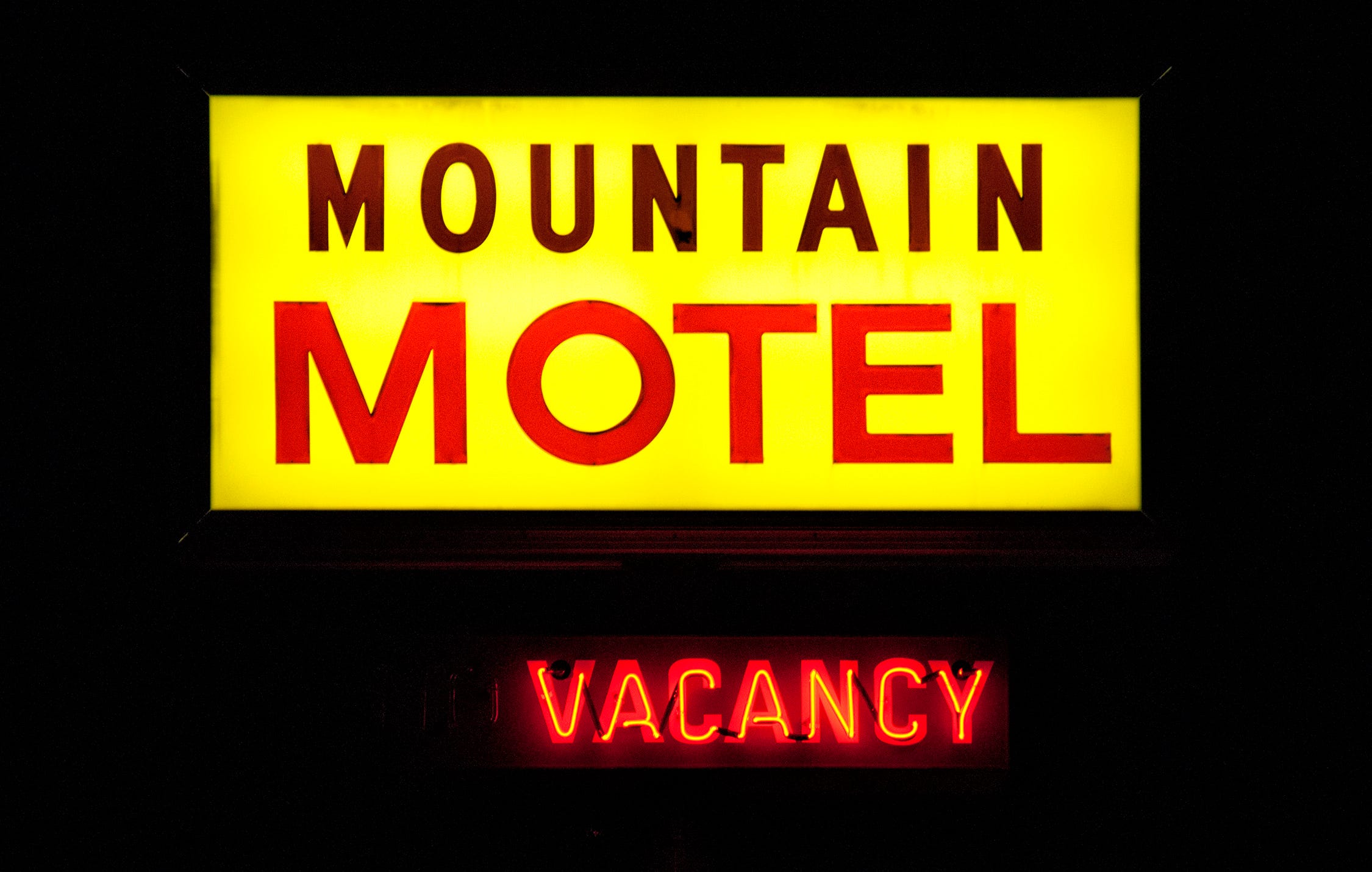
What struck me, as always, was all the open space. Central Nevada, State Highway 305 from Battle Mountain to Austin. Nothing there. Nothing to most people, at least, but lots there if you’re looking for it. Sage, dust, land, old homesteads, the occasional gravel road leading to a ranch or a backcountry hot spring. Bugs flying in the air, birds overhead, LOTS of space and that thin ribbon of pavement from one small town to the next. And mountains in the distance, seemingly, on all sides, although that’s a bit of an illusion.
The mountain ranges mainly run north to south in Nevada and each is separated by valleys. If you go east to west, it’s a long series of steep climbs, lonely windswept summits, then steep descents. If you’re going north to south or vice versa, you could stay in the same valley for long stretches. Very few fences and lots of space. All that space used to freak me out. I’m from the Northeast, New York City, that small island off the coast of America, where your horizon might only be 25 yards away, across the street. I learned to love Nevada, though, and the big empty that’s filled with magic. Filled with fascinating people, interesting history, fragrant sage - and deer.
The deer appeared suddenly. My buddy Paul was driving and we were doing a nice and easy 70 miles an hour, on our way from one hot spring to the next. The day was blooming ahead of us and we looked forward to soaking our naked butts in some primitive hot springs. We were making small talk and enjoying the feeling of promise I always get out there, that sense of peace and hope. Just cruising along on a lonely highway with all that sky overhead. And then, it seemed from nowhere, a deer was in front of our vehicle and time stopped.
It felt like the video tape snapped. One moment, we were driving, the next we had come to a sharp stop, the hood crumpled and popped open. The movie froze, and we along with it were frozen, still on the road somehow, with the intrepid and reliable Isuzu Trooper a big mess around us, along with bits of deer fur, we soon found, sticking to parts of the wreckage. How did we get here and what happened next? Grab a beer or a tonic water, maybe some iced tea, whatever you like, and I’ll fill you in. My version of this story can go on and on, but I’ll keep it short. Paul’s version, as I have learned over the years, can go on for hours, but he’s a better storyteller than I am and I left the scene before he did. So sit back and relax and I’ll tell you what happened with the deer, the hot water and all that remains.
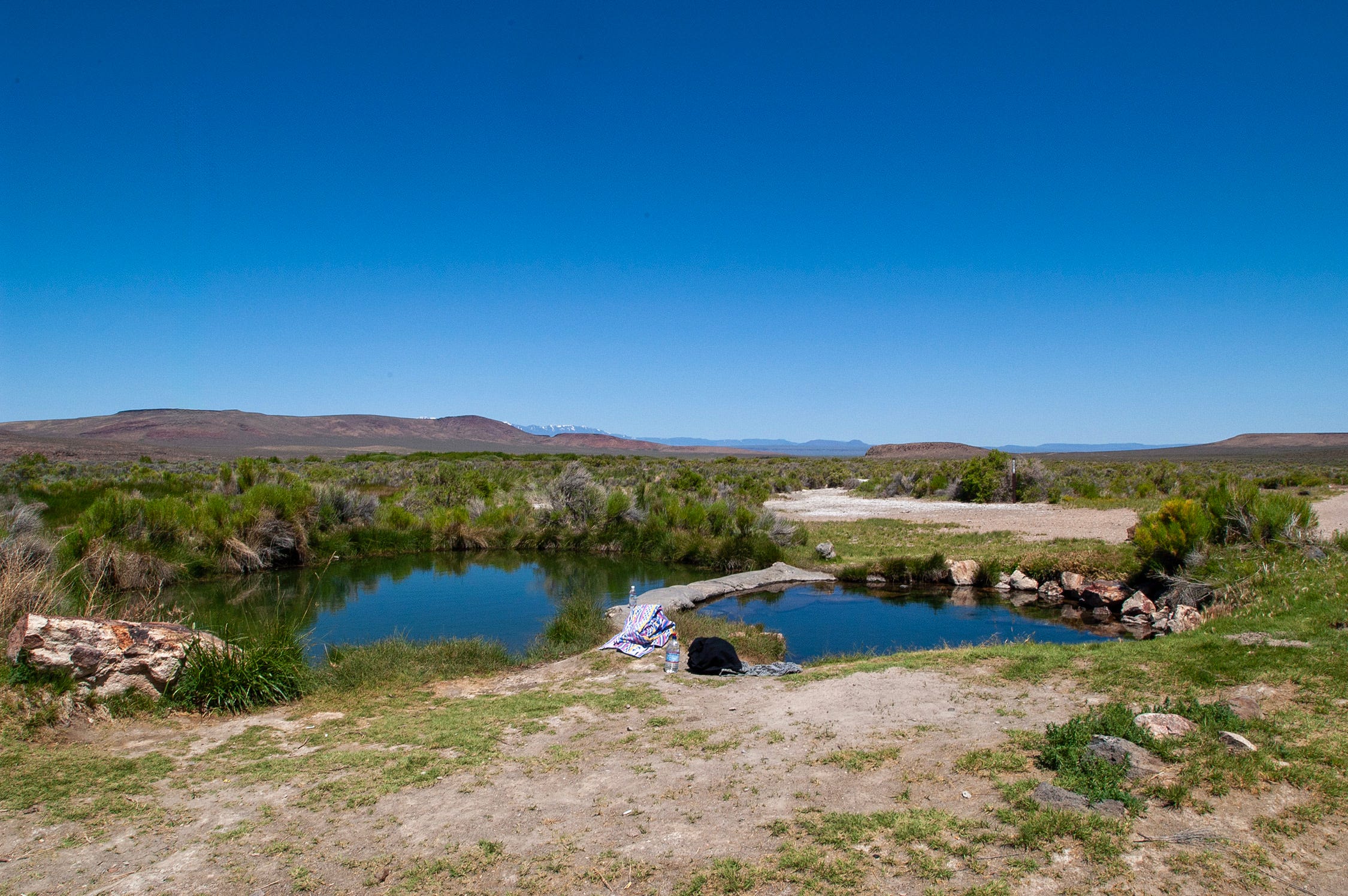
Paul had turned me on to hot springs a few years earlier. When we had reconnected for the first time since college, he bought me a book at a bookstore in Grass Valley, California. It was a guide to hot springs in the Southwest. I sat on it for a while and carried it on some road trips. Did I mention that I lived for road trips? I love going out there on the asphalt and driving around. I carried this book for a couple of years without using it. One day, though, I finally made the detour and went to my first hot spring - Miracle Hot Springs, in California, long since shut down. He had told me, “The first time you get out there and take off your clothes, it’ll feel weird, but you’ll get it as soon as you slide into the water.” He was right. I loved it and became hooked on soaking in hot water.
It was a previously unknown world to me, soaking and hot springs. You have developed springs, with established pools, where you pay an entrance fee. Some of these are like theme parks, with kids and nerf basketball hoops and slides in a large pool, fed by natural hot mineral springs. Then you have the other category - so-called “primitive” hot springs. These are undeveloped, but not truly. Many have local volunteers who make sure the water flows through some old PVC pipe from the source to the soak. People who scrape the algae off the rocks, who pick up the inevitable trash left by assholes who partied by the pools. These are often located in remote locations out west, usually at the end of a long ranch road or off a mountain trail you take after parking by a particular guard rail along a backroad. Following the instructions in books and finding these places was half the adventure for us.
I prefer the primitive soak, where it’s just you and nature, usually the desert. But we were fanatics and would go to all kinds of hot springs. We would meet up once or twice a year. I’d fly into Sacramento or Las Vegas, usually rent a car, and meet Paul at some godforsaken spot that we both knew. We loved being able to say, months ahead of time, “I’ll meet you on May 1st at Bruno’s at around 10AM.” We would drive to remote soaks 50 miles out on a gravel road, where you had to follow topographic maps and rely on GPS units. But we also got into the strange Americana of established town soaks, those theme park-type places that had sprung up in small towns sitting on hot aquifers. These were always in states like Oregon, Idaho and California. And there were hippie retreats, as well. They had started as sort of hippie, Zen places but, by the early 2000s, they had begun to get chic and fancy. No more drugs, sex and loose Buddhism. You paid the fee and just sat in the water. We had missed out on all the other stuff, but we knew about it.
This was another one of those trips. We had already gone to a couple of hot springs - developed ones in this case - Stewart Mineral Springs and Breitenbush. Breitenbush was a little too developed and crowded for us. I remember the lodging there being kind of a sparse bummer, so we decided to leave early the next day and go primitive. Did we go to Cougar Hot Springs and Crystal Crane after that, in Oregon? My notes say we did, but I don’t remember them. I just remember us speeding down that spectacular road in Nevada, on the way to something great, some soak that we were excited about.
It was broad daylight, 10 in the morning on a lonely Nevada two-lane highway with a steep pitch off to each side of the road. We were doing 70 or more. We’re both good drivers and, between us, one of us always sees everything on the road. He was driving. The deer seemed like he materialized from nowhere. Suddenly, he was in front of the truck. We had no time to react. We hit him straight on. The windshield cracked in seeming slow motion, the hood went up, and Paul somehow managed to stop us in a straight line. If we had had time to react, we would probably be dead, because the normal response would have been to swerve. At that speed, on that road, swerving would have rolled us many times and it would not have been pretty.
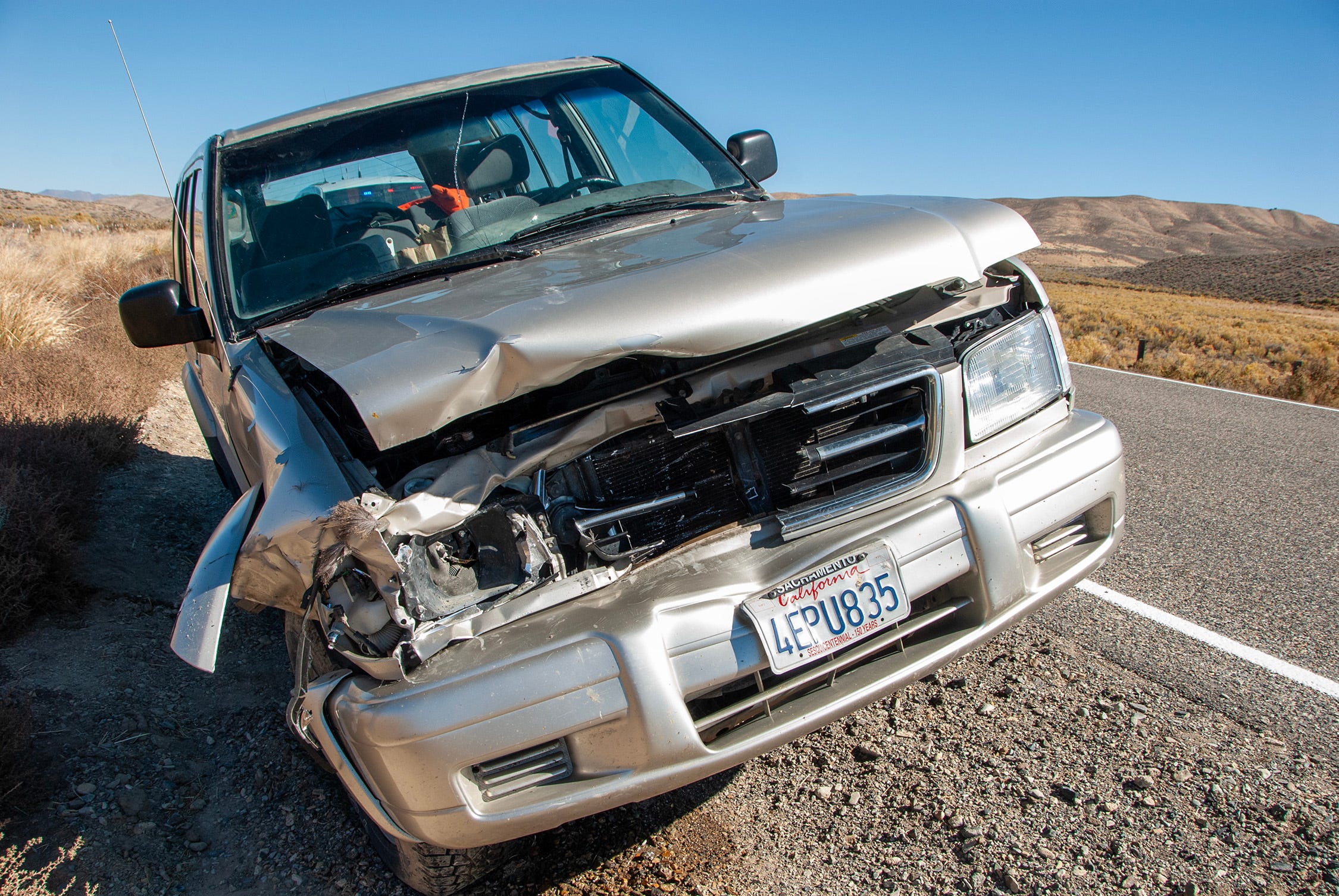
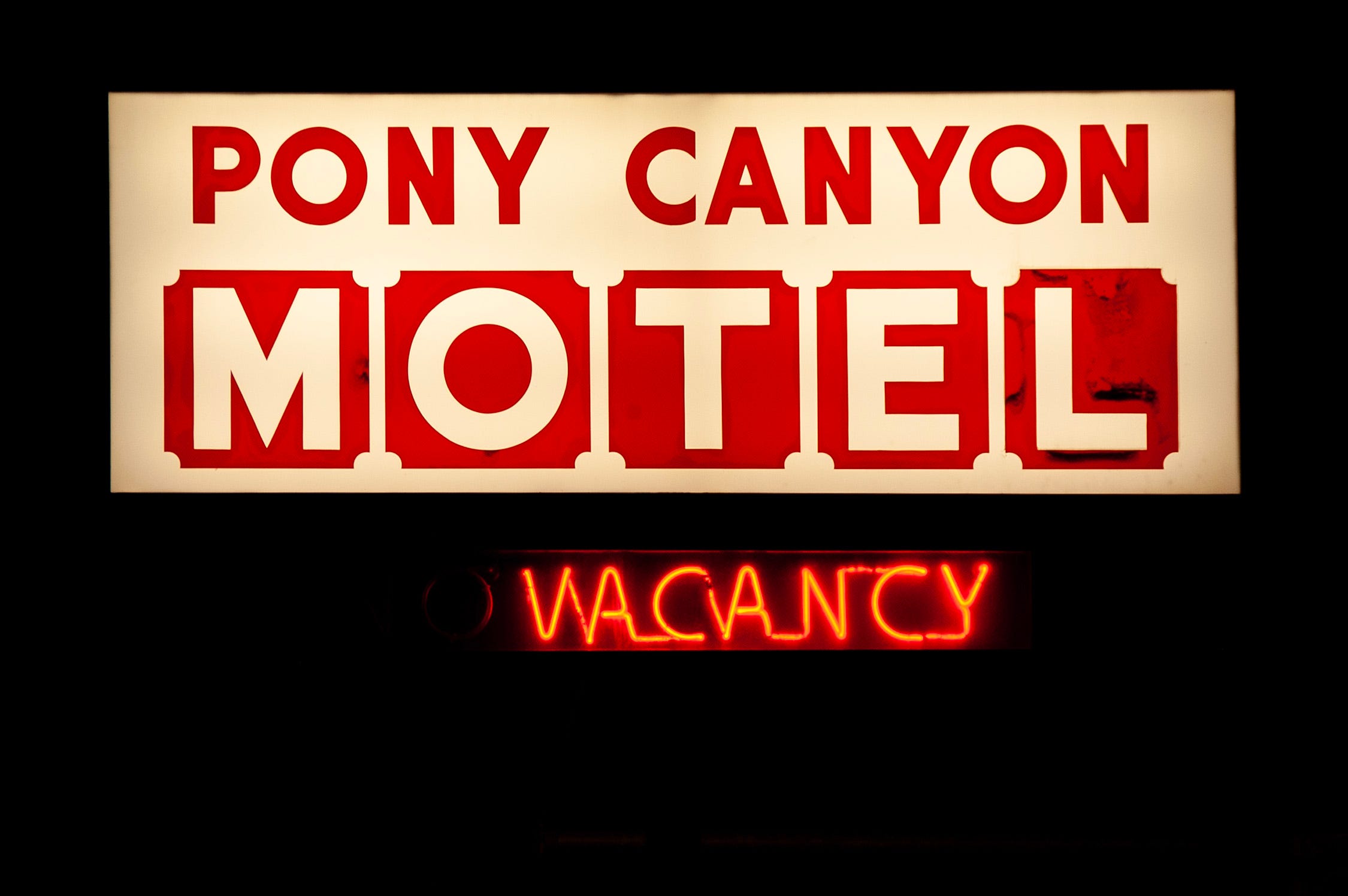
The car was totaled and the deer died instantly. We had been a few yards from a young deer the day before, admiring it, what a magnificent creature it was. Then this happened. The first thing we did was take stock and make sure we were each okay. We got out and looked around and were still trying to see through the mental fog that had come down on this bright, sunny day. Just a few minutes into this, a small car came by, driving south. It stopped to see if we were okay. At the wheel was a middle-aged guy. He was wearing a purple fez. Paul and I consulted quickly and decided I should hitch a ride with this guy to Austin, where I knew the manager of the Pony Canyon Motel. We thought he might be able to help us. I’m not sure our flip phones had a signal, but you didn’t get much signal in those days, so this was the plan. I would go and see if Dean could help us.
I had become friendly with Dean over the course of a dozen stays at the Pony Canyon. Austin is a tiny mountain town, one of a few strung out on Highway 50, the old Lincoln Highway that runs from Maryland to Sacramento. For whatever reason, most likely my life choices, Austin was one of those towns I always reached as evening was coming down and I needed to find a room. Fallon was another one. Of the three motels in Austin, the Pony Canyon was where I always stayed. One time while checking in, I had struck up a conversation about the New York Yankees. Dean was wearing a Yankees cap, which I found odd for some reason.
I have been a Yankee fan since I was a child. My mother grew up in the shadow of the stadium and I was fated to root for them, even though they sucked at the time and have gone through some periods of severe suckitude ever since, but that’s a story for another piece I don’t care to write about now. This was when the last dynasty was still intact and I was still gung-ho. We bonded over the Yankees for a few minutes, I checked in, got some sleep, filled my tank the next day at the gas station next door, then moved on. I had done this for enough years that we were on friendly terms by the time Paul and I had had our moment of fate with Bambi.
I settled into the car and had a long conversation with the guy wearing a fez. He was returning from a Shriner’s convention and was a good soul who had stopped to see if we were okay. That’s common out west. As with mariners on the open sea, drivers out west will often stop to help you if you’re in the middle of the great wide open. He instantly agreed to take me to the Pony Canyon. It was on the way for him. I don’t remember what we discussed - deer? Shriners? Life in general? I wish I had taken notes, but I was still shell shocked.
He dropped me at the motel and drove off. I found Dean behind the counter, explained myself, and he instantly agreed to drive me back out there to the wreck. I remember wondering why I had come here for help instead of remaining with Paul, but it was desolate out there, this was the plan we made, and it was working so far. At that moment, to my surprise, I got a call on my cell phone. It was from a state trooper who had rolled up not longer after I had left with the Shriner. While I was still marveling at having cell service in Austin, Nevada, he told me that he was on the scene and that a flatbed truck was on the way. Dean and I jumped into his small car and headed out, this time north, on Highway 305, speeding to the wreck in the shadow of the Shoshone mountain range. I don’t remember what we talked about. Deer? The Yankees? Life? I was not taking notes, but I was cognizant of being taken care of, somehow.
When we got there, the truck was already being winched up on the flatbed. The front of Paul’s Trooper had chunks of fur stuck to it. They had tossed our bags into the truck, and we were ready go to Battle Mountain, where this tow driver came from. He, Paul and I got into the cab and took off at a fast clip. I don’t remember what we talked about. I’m not sure we said much of anything. I had started to think ahead, how I had to be back in New York City the next evening so I could interview actors the following day for a film that my filmmaking partner and I were making. It was about a beaten-down financial analyst who thought he was the messiah. We had been working on the script for months and this soaking trip was a happy break before we started production.
We tore down that highway, going north at 85 miles an hour, and finally ended up in Battle Mountain, Nevada. It was not the friendliest place to start waking up from this accident. I wanted to hang out to support Paul, but I also didn’t want to miss my flight out of Reno the next morning. I made some quick calls and learned that there was one bus a day that came through this town. There were no trains and there must have been no car rentals. I decided to try to make my flight. It was either that or re-schedule 30 auditions. We set Paul up in a hotel and then went out into the streets of Battle Mountain. There were no other pedestrians. We slowly walked across Battle Mountain to catch that one Greyhound bus.
I don’t know where that bus originated. Everyone on it was going somewhere, but many of the men did not look rooted. A few wore standard-issue sweatsuits. It felt like they were en route from one uncertain place to another. There was a huge guy in front of me, in the passenger seat across from the windshield. He was farting relentlessly. We stopped in Winnemucca for what the driver called a “Coke and a Smoke.” I looked at a few of them through the bus window, standing around on the blacktop in angular poses, looking at the ground, smoking cigarettes, thinking about something. Humans are always thinking about something and this was a snapshot of half a dozen men in their own worlds. Ten minutes later, we were on the way again. Dante’s rolling inferno.
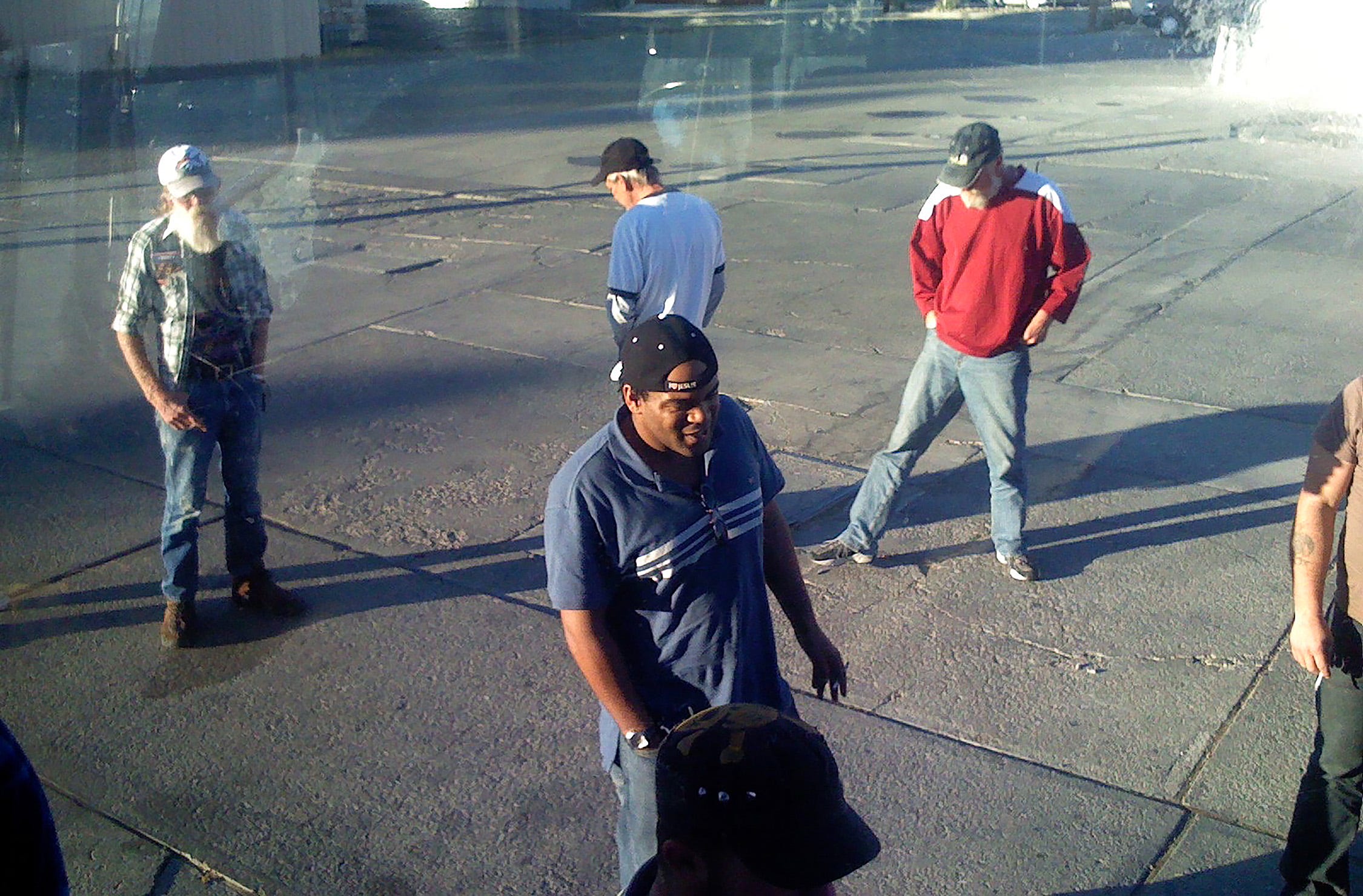
America is split into classes and you could argue that money is a far greater divide in this country than race. In Vegas, I had always noticed that the poorest people did not drive. They were always desperate and forlorn at the bus stops, even when it was over 100 degrees. They had to take busses in a town that has awful bus service. The same goes for interstate travel. Those who cannot fly or drive a car must take the bus. We are long past the era of “It Happened One Night,” where the bus ride is a kind of egalitarian adventure. Bus rides are grueling, grinding and grim.
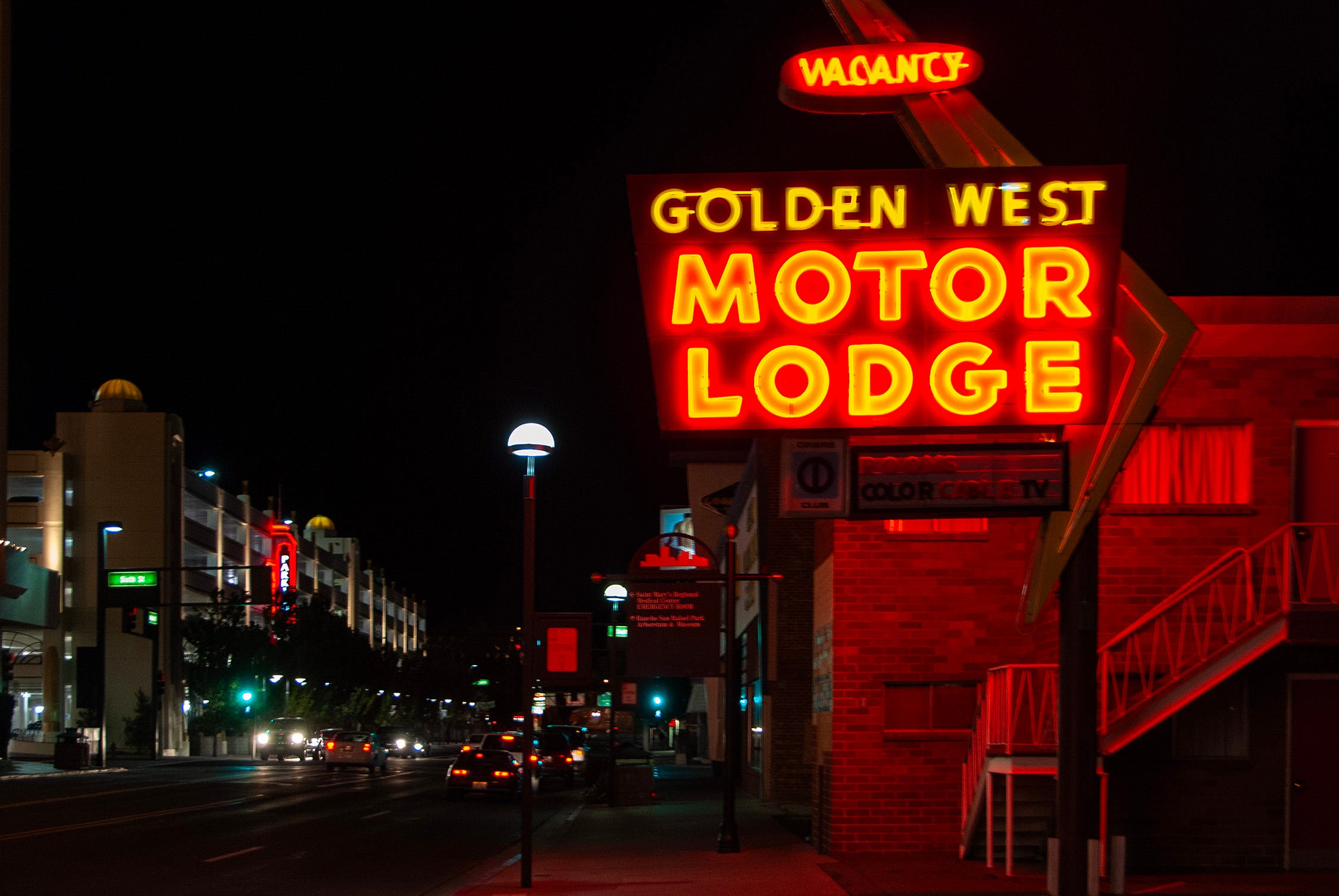
We pulled in to Reno. It was too early for the airport and it was already dark, so I pulled out my camera and shot a few neon signs on the strip. After a few shots, the entire lens fell out of the camera. I looked down and my jaw probably went slack. The camera had taken some damage, probably when they threw my bag from the Trooper into the tow truck. I tucked it back in the bag and got that thing repaired when I got back home. I don’t remember if I got a room for a few hours or just sat in the airport until my flight left, at 6AM. I made the flight, got back to the city and resumed my life. There was so much going on that I didn’t have time to think much about the deer or the desert. We were making a film.
Paul was in Battle Mountain for another day or two, figuring out what he was going to do with the truck. He gathered some weird experiences there. Then he took a bus home to California, across the Sierra Nevadas. He sent me an email with strange things that he had learned along the way. He talked about Battle Mountain and about Interstate 80 and described a long conversation with a truck driver who was his seat mate on that bus. Both of our lives had fractured when we hit that deer and his took an extra few days to re-form. We moved on with our lives, exchanged emails about trucks, bumpers and deer, then began to plan our next soaking trip.
Paul, incredibly, had that wreck repaired. It was a 1999 Isuzu Trooper and he loved that truck dearly. He loved that it was from the 20th century and he loved how it was built. He loved - and spoke glowingly about - the brakes, how heavy duty they were. Maybe out of sentimental value, he had that thing flat-bedded to Winnemucca, where he spent a lot of money to fix it. He wrote to tell me how the desk woman at the repair place was a meth head. They had to replace the whole front clip. It took a long time, and it’s hard to make something whole again after a bad crash. He finally gave it to one of his sons, who I believe drove it into the ground, eventually burning out the engine by not changing the oil. My memory is fuzzy and there have been a lot of miles on the odometer since then.
The first time I soaked in hot water under an open sky was a glorious revelation. It still is. All stress boils off, all problems are put in their place and forgotten. Things make sense. The world is okay. Striking that deer made the world stop. It was a catharsis, but terrifying, one that created a whole new set of logistics. It was a watershed moment, where life could have ended, but it didn’t. Was there a lesson there or not? Does it matter? Life goes on.
And what about the deer? I can’t presume to get into that consciousness, but I did think about the strange events on his part that caused our mutual, infinitesimal chances of collision with each other that morning, in the middle of an endless open plain. He went from pure, wild life to violent death. His consciousness ended terribly in a moment.
After I got home and settled in, I began to look around for ways to protect myself from deer strikes. I lived in Greenwich Village and owned a Toyota Tacoma pickup. I became obsessed - my usual condition - with finding a deer bumper. I settled on an ARB bumper, a massive steel thing made by an Australian company. It was so heavy that I had to get new springs on the front of that truck to compensate for the weight. Then, I had to get new leaf springs in the back to level it off again. By the time I was done, it had cost me a lot of money, but I felt safer.
My next vehicle, a few years later, was a modified Ford E-350 Econoline van. I found the one guy in the country who made a deer bumper for it - the Buck Stop Company. When that was installed, I felt safer. It was massive and I felt as though I, and not the deer, had become the threat. Still, the big lesson here was that you never know what’s going to rise up out of the road in front of you and change your plans. This applies to everything in life, all the “planes of there,” as Sun Ra said. You meet another person, you lose a job, you break up, you fall in love, you get sick, you hit a deer. Anything can happen and it’s usually unexpected.
I was always a cautious driver, unlike most of my friends. I had had a car hydroplane on the Henry Hudson Parkway in the rain when I was 17 years old and was lucky to get out alive. I had been driving slowly then. The car went out from under me, did a 180-degree turn at 50 miles an hour, the oncoming cars in my lane racing towards me as I went backwards, then the turn completed and I was facing forward on the other side of the road, stopped, gasoline pouring from the bottom of that blue Oldsmobile. So, it’s not always how you drive. Sometimes, life will snatch us up and remind us that we are not in control, much as we may think we are.
I have spent the past 20 years scanning ahead for deer on the road. I’m probably worrying about the wrong thing. I get nervous in small cars. But then I generally forget about the deer and live my life. We get older and accumulate scars. Sometimes, I remember that crash. In the moment after that deer strike - after the hood crumpled, the windshield cracked, the car stayed straight, and we came to a stop - I took stock and realized that I was going to live. That’s not always the case. Sometimes, you simply wake up later and find that you survived. Sometimes, you don’t wake up.
I see signs on the highway to watch out for Elk or Moose and can’t help but think about what it would be like to hit one of them. Those animals are much taller than deer and tend to come through the windshield when you hit them. Two years ago, Tonya and I were coming out of the mountains in Idaho after dark one evening and it was a scene from a bad horror movie. We began to pass live deer, on and off the road, every mile. Then a dead one, then another. I got spooked. We crept along for 20 miles, around hairpin turns and down steep hills, and finally dropped into the town of Idaho City, where we found a room and I could finally unclench my hands. Fear is a real drag on the psyche. Fear can destroy you, but it can also save you. I’m not sure how you find the balance.
I guess you have to just live your life, take good care, and learn from your experience. I would not survive my youth now if I had to do it with this body and mind. I’m not as dumb or as tough as I used to be. Paul and I still go to hot springs, but not as often. I drive as much as ever and am mindful of deer, but I no longer have a big deer bumper on my vehicle. I look both ways when I cross the street, take care in strange places, and try to honor the sense in my gut when it comes to danger. It’s not always easy to discern danger from paranoia. That’s another balancing act. I don’t eat lettuce these days, but that’s due to an FDA recall. There are many pitfalls in this life, many ways we can miss out on the moment, many ways to check out forever.
I’m not a fatalist, although I like to think I’m a realist. The lesson is to live in spite of the fear. The show goes on. We can choose whether or not to step out on the stage or cower in the wings. Say a prayer for all the people. Say a prayer for all the animals. Say a prayer for the planet.
Paul Vlachos is a writer, photographer and filmmaker. He was born in New York City, where he currently lives. He is the author of “The Space Age Now,” released in 2020, “Breaking Gravity” in 2021, and 2023’s “Exit Culture.”
Oh, my goodness, Paul! This glorious piece kept me engaged & excited & brought cathartic tears at its conclusion. What a way to begin my day...you took a truly exciting experience, wrote it up beautifully & expanded it into a beautiful philosophical treatise. A million thanks.