
Marriage, Continued
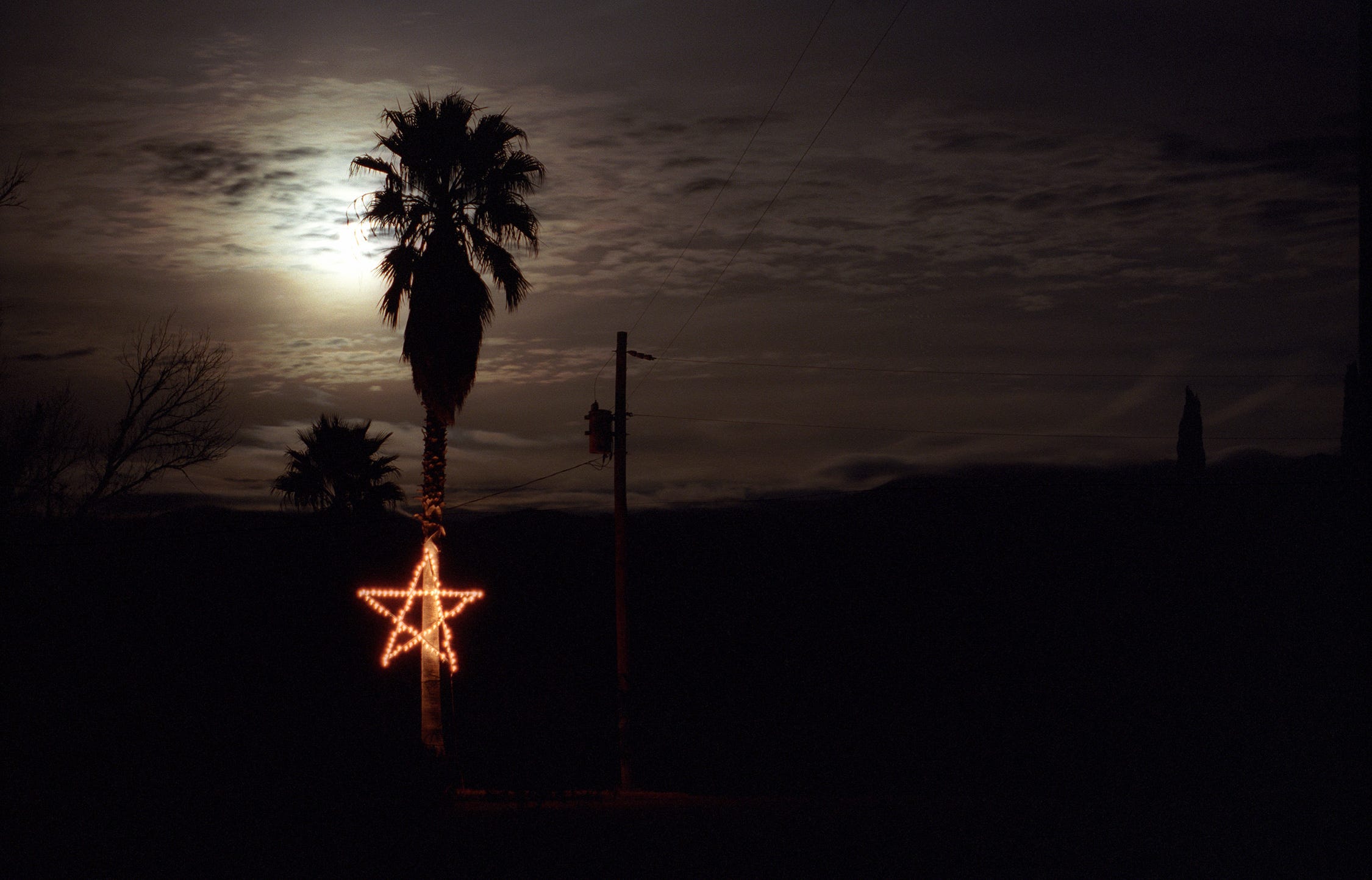
I think of us like that. Safe, on our little boat docked in the harbor...


Tonya:
I wasn’t ever worried about being married to you. We have basically been married for the past three years. We’ve lived together, cooked together, walked the dog together. We’ve made it through various medical uncertainties, my ex-husband’s death, our dog Santo’s back surgery. If we were going to fall apart under stress, we’d have fallen apart a long time ago. For a few months-long stretches, we each had no commitments outside the home—our home being this one-bedroom New York apartment—and we spent the vast majority of each day together. For other months-long stretches, we were on the road and we spent the full 24 hours a day together. I could tell from the very beginning that I would enjoy living with you. We both like to talk. We both hate to argue. We both spend big blocks of time working silently on our computers or lying around reading books. I like to go out for long walks and then come back and tell you all the strange things I saw on the walk. You go out for long bike rides and come back with food. We fit together very nicely. I was never worried that it would be unpleasant to be married to you. I will admit, though, I wasn’t totally sure about the idea of getting married.
After all, I’ve been married. And you’ve been married. And where did that get either of us? When I received the full text of my divorce decree in 2022, I remember laughing over a clause that prohibited me—actually prohibited me—from getting married again in the next six months. As if, after that whole hellish ordeal, I’d want to run out to volunteer again! I’d already been married. I gave up my name to it, along with my whole identity. The one thing I knew, once I was free, was that I was never, ever, doing that again. Not another long wait at the Social Security office. Not another year spent learning to write my own signature.
But time went on, and our life together was clearly such a nice thing. I began to think about it. Though I was still pretty wary of the idea of marriage as a whole societal construct and industrial complex, I did realize pretty early on that it would be nice to be married to you.
You and I went to a couple weddings this past summer, not long after we got engaged. They were not bad weddings. One was really quite sweet. But it’s a different thing for me to go to a wedding now. I felt a strong, almost nauseous aversion as I watched each bride ferried down the aisle. I saw these very sweet young girls, so happy, led by us on the arms of their fathers, and I thought of virgins taken to the mouth of a volcano. I thought about the language of it, the “giving away” of the young girl to her husband. I thought about the veil over her face, which only her husband would lift.
“Our wedding will be nothing like this,” I told you at that last wedding. I needed to see on your face that you felt the same way. That you weren’t picturing white dresses and dance halls. Thank god, you looked absolutely horrified at the thought.
You said, “City Hall” to me. I repeated it back to you, so relieved.
Paul:
I could make a joke and say that nothing has changed but our tax status, but that would not be true. It would also diminish, even cheapen, the commitment of marriage. I tend to make jokes around serious things, sometimes for no good reason.
You did such a good job of expressing what life is like together, painted in broad strokes, it’s hard to improve, but please let me try.
We have driven tens of thousands of miles together. We have stayed in strange motels and explored weird little towns. We have seen wondrous and ordinary things. We have walked together now for 4 years, every day, for long stretches of time and territory. We have sat quietly in the same room, as you mentioned, and we have shared many meals. This all sounds run-of-the-mill, mundane, ordinary. But that is a shared life. It’s what life is composed of, as much as or more than the grand events. And it is not something I enjoy with anyone else. With you, it’s an exquisite time.
Marriage is an institution based on many practical things; this is reflected in the way laws are written. The sounds of the toddler and the infant next door come through the wall as I type this - loud screams and pleas that rise and fall. There are tax implications to marriage, there are legal ramifications, and there are shared living decisions. People get married for many reasons. Some people get married for no reason. But I am an idealist, possibly cloaked in the mask of a cynic, and I believe in love. A pledge to stick together through thick and thin is a radical vow.
I had to learn to sit with myself for years before I could stomach the idea of living with somebody else. Beyond the world of the physical, there has to be a quiet space where two people can share ideas, feelings, and thoughts. Call it a clearing in the forest, a hot spring in the desert, a busy street corner with the world exploding all around. We humans are a funny animal. I could be walking by myself, run into a friend on a busy street, and we both erupt into conversation. The world disappears. It’s a form of communion and we are not the only species to share this joy. But with you, I get to experience it all the time.
When we talk together, I have learned to curb my New Yorker’s natural urge to constantly interrupt. It’s something we do in this city, not out of rudeness, but more as a way to signal deep involvement in the conversation. I try to listen to you, to let you speak, and to look in your eyes while you say whatever you say. It’s an exquisite enjoyment.
When we first got together in person, roughly on the 25th Parallel, you were very quiet. I wasn’t sure if this was due to what you had just been through or whether it was an acquired habit, a self-protective thing, perhaps something from childhood. All I knew was that, when you did speak, it was astonishing to hear. I had known from all those years of editing together that you were a superlative close reader, but you were also a close listener in person. You would listen and then respond in a thoughtful way. Not only that, but you were - and continue to be - wickedly funny.
I have, for decades, had a metric that I pulled out of thin air: “Could I share the back seat of a bus with this person all the way from New York to Chicago?” It may sound ridiculous as a hypothetical, but I find it usually weeds out most people. Those who remain are the people I love the most. With you, I could take that bus ride around the world and back.
Tonya:
Your bus ride philosophy makes me think of something you said to me four years ago, one night in late November. You made me the kindest promise that night. You said I would always have a safe harbor with you if I ever needed one. You said it without caveats, without strings attached. You had intuited that I might need a place to run to and you offered me a place.
I remember that I was sitting in the dark that night, a few days after Thanksgiving. I was at my desk, in the house in Kansas, which was deadly silent, as it generally was after a blow-up with my husband. He had taken a few pills—I’d stopped asking which, or how many—and gone to bed. I stayed up late in my office that night, put on my headphones, and listened to you.
It mattered that I heard you say the words out loud. I could hear the slight throatiness in your voice when you said the word “safe.” I could hear that you weren’t being glib. You and I had just recently progressed from writing daily emails to sending voice messages. My idea—a terrible idea, a wonderful idea. After you’d finally come through Kansas and I’d seen you in person, I couldn’t just go back to the old text-based conversation. Instead, I asked you for voice memos. I asked you to record soundscapes from your neighborhood. In turn, I sent you songs I’d been writing for myself on the guitar. I walked out to meet the donkeys who lived in a field east of town and recorded their sniffles and humphs as they traipsed around in the dry grasses. I told you stories about my day, just as I’d been doing for years in email, but now I said them out loud to my phone as I sat in the hollow place under the branches of a big juniper tree.
In the recordings you sent me, I heard Santo barking and cars honking. You drove to Brooklyn one night and spoke to me from under the Gowanus expressway. You sang me a little song you’d made up about Vaughn, New Mexico. On the night you promised me a safe harbor, you were in the Holland Tunnel, caught in gridlock traffic between Jersey City and lower Manhattan. You described the chaos at the Jersey side of the tunnel, where some Yonkers-based construction company was replacing all the old toll booths with a system of sensors. I could hear the quiet air around you in the car, occasionally broken by a horn. I could hear the rustle of your coat collar. This is what made me think of it, when you said you’d take a bus ride with me forever. I have never wanted to be anywhere in my life as much as I wanted to be stuck with you in the Holland Tunnel traffic that night.
I think of the words “safe harbor” often now, at night, when you and I are in bed and Santo is nested in his pillows above us. I think of us like that, rocking to sleep together, safe, removed from the day, on our little boat docked in the harbor.
Paul:
I could look back and point to a dotted line of events - my love of the American west, finding a free newspaper in a small town, having you become my editor years later, the effects of Covid on my world, the implosion of your situation in Kansas - I could trace all these things to where we are now, the safe harbor you describe. But I could never have dreamt that path at the time, nor would I have been able to pursue it. Does that make it fate?
I’m not a big believer in hidden hands directing things from above - or below. I do believe we can make our own luck. But a small part of me has never been able to shake the idea of fate, as I have mentioned before. Still, I don’t think about fate much on a daily basis.
What is fate, anyway? Is it something that just happens - we humans live our lives and the Gods play with us for their own entertainment? Is everything predetermined? Can you tempt fate? I was happy, living my life and doing what I enjoy, and then one day I’m in a rest area by the side of a Florida highway, hopelessly in love.
How did I get from there to here? There’s the “twig in the Mississippi” theory: that most small actions a person takes won’t affect the big things, but I have seen some huge things turn on a small action. As you have pointed out before, everything had to happen exactly as it did, in exactly the order that it did, for us to have even met. And I guess, in hindsight, you could apply that theory to everything in life.
And life, itself, is just a blip in the long continuum between nothingness and oblivion. It is precious and sweet, and occasionally bitter, but it’s short, so we must seize the day. Life is not always easy to navigate. We all need sanctuary and love, wherever we can find it.
When you and I began to exchange audio notes, I said to you, “This is a bad idea,” but that was my way of saying, without uttering the actual words, that we had crossed a line past friendship. For many years, we had built a solid foundation, based completely in the written word, but when I first heard your voice, what had been abstract became very real.
I remember turning to Santo and saying, “Oh man, what am I going to do now?” He looked back at me with that intense look of his and did not blink. Fate had most definitely brought him into my life. In a moment, my life had changed forever. I had built my own safe harbor over the years with him and a few dear friends. When he and I looked at each other in that moment, the universe cracked open just a tiny bit.
Tonya:
I’d prefer not to believe in fate, but I can’t help it. Maybe if I had been someone else—someone who picked a course in high school, followed it through college, into a career, along with the typical marriage and babies—then I would feel differently. If my life had followed a straight, predictable line, then I could believe I’d exercised some control over it. But I have rarely felt that I was in the driver’s seat of my life. Almost everything I’ve experienced has happened by strange chance and serendipity.
Take our wedding, for example. We’d planned, since before we were even engaged, to get married at City Hall. We told everyone that’s what we were doing. We even made an appointment. It was going to be 10:45AM on November 19th.
But your brother happened to have lunch with an old family friend on November 16th. The family friend, your mother’s Godchild, is a federal judge in Brooklyn. And, by the end of their lunch, we weren’t getting married at City Hall anymore.
Instead, on the 19th, we were across the East River, in a conference room on the 14th floor of the Federal Courthouse for the Eastern District of New York, with the Brooklyn Bridge and all of southern Manhattan out the windows. There was a framed letter from Abraham Lincoln on the wall. There was a spread of baklava laid out on a table. The judge talked about your mother’s trips to Lord & Taylor’s with his mother, and how your family had let him crash on your uncle’s couch for a while when he needed a room in the city. Your brother took photos with his phone. My brother-in-law filmed us with his. Somehow, without ever intending to, we ended up with a family wedding. Who ever could have guessed that would happen?
But still, it wasn’t like any other wedding. Neither of us was given away. Neither of us was led anywhere. There was no altar. We came as ourselves. I wore a black dress. You were in jeans. We both walked to the window under our own steam and we took each other’s hands and made our vows. And, like that, we were married. Not like a bride and groom on a wedding cake, but more like two neighboring countries signing a treaty. We united our two sovereign, inviolable nations together. We promised to care for and protect each other. Or else we were like two kids making a blood oath. We pressed our hands together, and we kissed, and we became a family.
Then, as our family tends to do, we went outside and found some food.
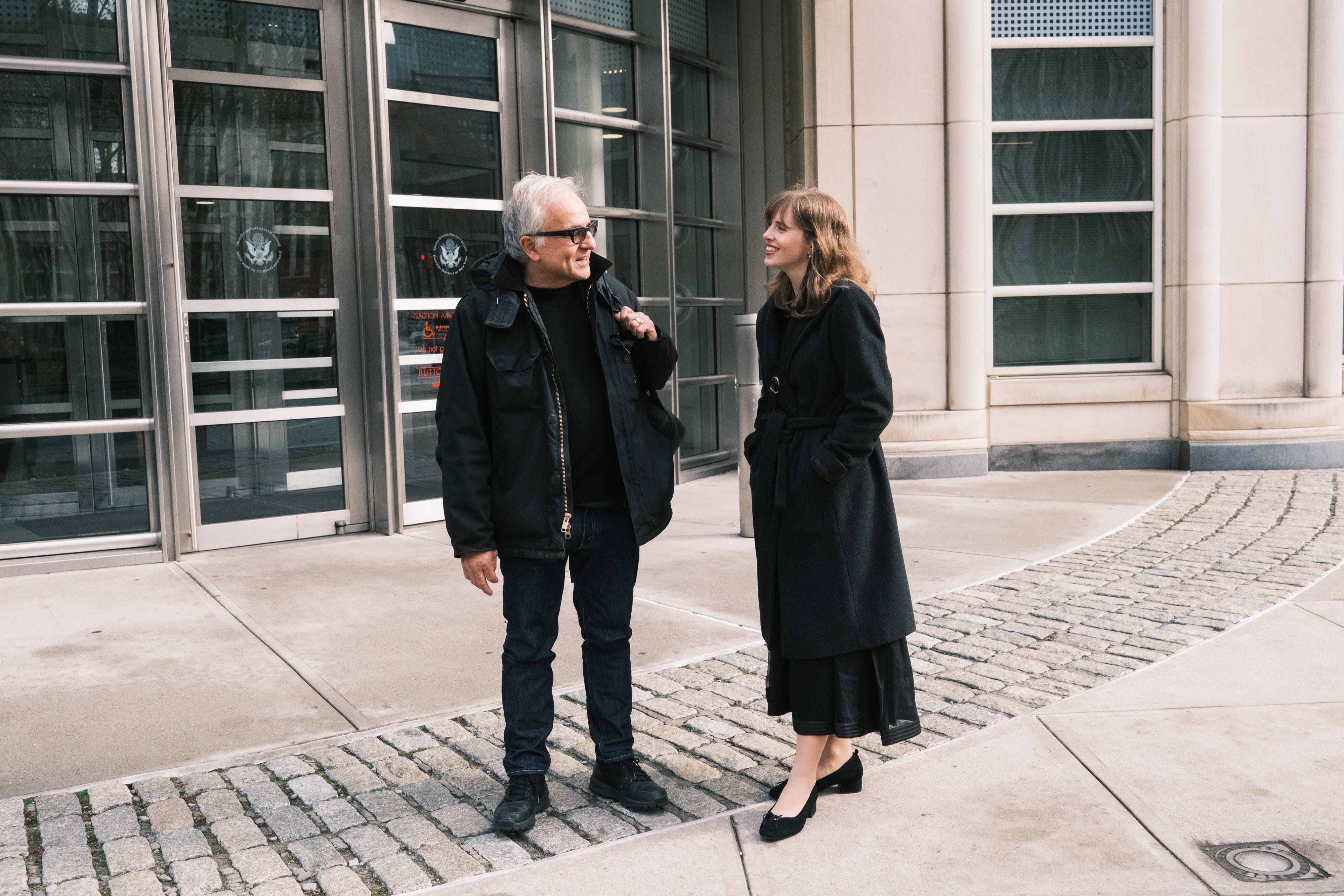
Paul Vlachos is a writer, photographer and filmmaker. He was born in New York City, where he currently lives. He is the author of “The Space Age Now,” released in 2020, “Breaking Gravity,” in 2021, and 2023’s “Exit Culture.”
Tonya Morton is, among other things, the publisher of Juke.
If you enjoyed this post, hit the ♡ to let us know.
If it gave you any thoughts, please leave a comment.
If you think others would enjoy it, hit re-stack or share:
If you’d like to read more:
And if you’d like to help create more Juke, upgrade to a paid subscription (same button above). Otherwise, you can always help with a one-time donation via Paypal or Venmo.
How many couples could possibly write such a heartfelt and expansive tribute to each other and their love for each other. Bravo!
Here's to safe harbors and fate and undying love! (I love the photo of you two)🔆❤️🌷☕☕