
Il Dolce Far Niente
Four Italian words. The sweetness comes first. Before the doing. Before the nothing...

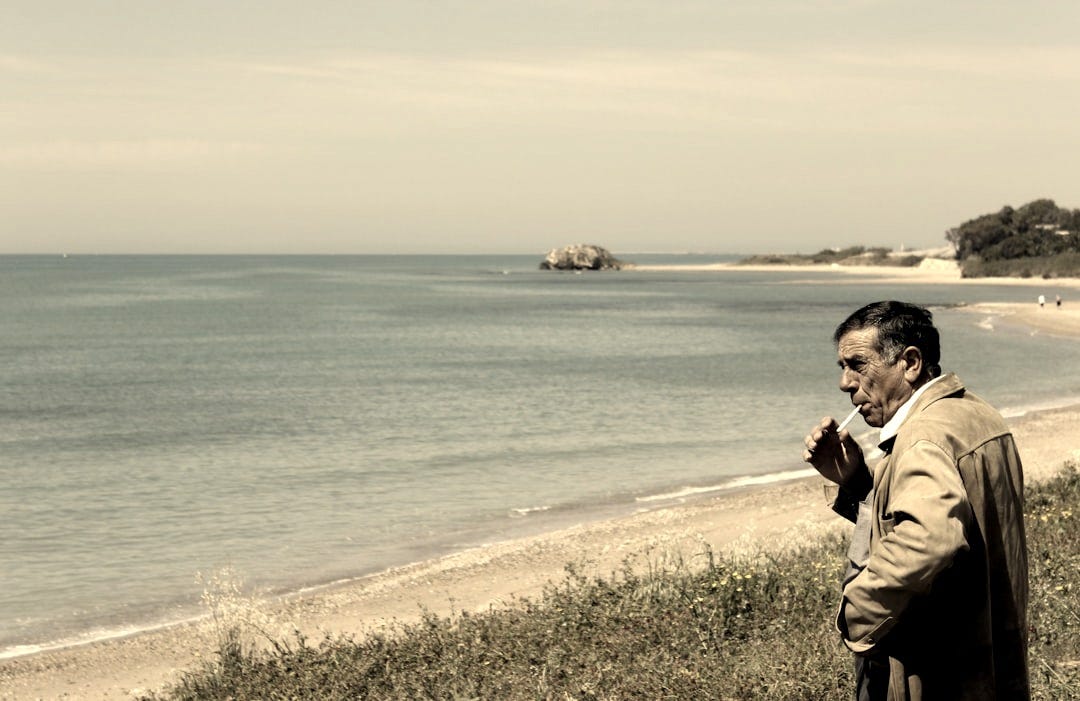
Il Dolce Far Niente
Four Italian words. The sweetness comes first. Before the doing. Before the nothing. That order is not accidental — it is the whole argument, compressed into a grammar.
The translation most people know is the sweetness of doing nothing. Close enough, and yet not close enough. Niente is nothing, yes. But the phrase does not defend vacancy. It names a pleasure. There is a difference, and it is not a small difference. While often viewed as a lifestyle ideal in English-speaking cultures, it is a common sentiment in Italian culture. It is a philosophy of life.
I have been americanized. Not as complaint, not as irony or accusation but as fact. It happened the way light changes in a room: gradually and then all at once. By the time you notice, you cannot say exactly when the sun went. The morning arrives with a list already nailed to its door. The obligation disguised as opportunity. The opportunity degraded into duty. A man can spend a whole day in motion and never once arrive. He lies down tired and calls that proof. It is not proof. It is only fatigue wearing the mask.
The Italians have a phrase for that condition. Not for the fatigue — the American creed has many words for fatigue and honors them all. They have a phrase for its refusal. Not a cure. Nothing so dramatic. A chair in the shade. A coffee taken without hurry. A walk with no transaction at the end of it. A conversation that does not need a thesis. The sea, when there is sea. A window, when there is not.
What the phrase is not: laziness. Italian has a word for that — pigrizia. This is something else, what the old texts call stato di beata inerzia, a state of blissful inertia. The difference is the width of a hair and the weight of a stone.
And yet the old prosecutor steps into the room soon enough. Are you resting, or hiding? Is this philosophy, or a noble veil thrown over plain human reluctance?
These are not foolish questions. They are the necessary ones. Any honest account of idleness must pass through them. Yes, sometimes a person hides laziness inside beautiful language. A person who cannot face the page, the bill, the hard talk, can sit in a handsome courtyard and call his retreat wisdom. If he never returns, all the Italian in the world will not save him. That is not a philosophy. It is avoidance with better upholstery.
But the prosecutor is not the final authority.
The Romans knew this. Two thousand years before the phrase existed in Italian, they had the concept formalized in Latin: otium. Not vacation. Not idleness. But cultivated leisure, understood as the other half of a complete life. Cicero wrote about it. Seneca wrote about it. Pliny the Younger retreated to his villa by the sea and wrote letters about what the afternoon light did to the water, and called that a form of labor. Otium and negotium — leisure and business — were not opposites in Roman thought. They were paired obligations. You owed both to yourself. A life given entirely to work was not considered virtuous. It was considered diminished.
That is the lineage. Il dolce far niente did not emerge from mere temperament. It was built, consciously, over centuries, into the Roman understanding of what a fully human life required. Italy did not stumble onto this. Italy theorized it, in Latin, before the Italian language existed.
Nor is the land incidental. Southern Italy in summer teaches the body something it cannot unlearn. The afternoon heat is not metaphor — it is a physical fact that determined when people worked, when they ate, when they spoke, and when they stopped. The passeggiata, was not invented for charm. It emerged from a Mediterranean climate that made evening the natural hour for human community. The Roman villas were sited by lakes and sea not for aesthetics alone but because the body required it. Geography shaped practice. Practice became habit. Habit became philosophy. Philosophy compressed into a phrase.
This is not the story of a culture smarter than its neighbors. It is the story of a people who lived in a place that forced an honest confrontation with what the body actually needs — and who had the discipline to build a language for what they learned.
And there is one piece of this history the postcard version omits entirely. When the phrase first appears in English writing, in 1814, it is observed among the Neapolitan lazzaroni — the laboring poor of Naples. Not the aristocracy. Not the leisure class. From the people with almost nothing.
That changes the moral weight of the whole thing. The philosophy did not originate from abundance. It was forged by a class that had mastered the art of inhabiting time fully in the gap between work and want. People with the least taught the world something about how to live. That is not a charming Italian postcard. Rather it is a harder, more serious claim — one the essay version of this subject rarely makes because it is uncomfortable. It says that what we are calling wisdom grew out of scarcity rather than ease. That the lazzaroni did not simply fail to be productive. They refused, on some ground what the body understood before the mind named it, to let the hours that remained to them be converted into proof of something.
Roseto, Pennsylvania, a community founded almost exclusively of southern Italian immigrants, was studied in the 1960s and found to have strikingly lower rates of heart disease than the surrounding American towns — lower than diet or genetics or exercise could explain. Researchers eventually concluded that the difference was the life itself: the dense communal structure, the unhurried interaction, the uneconomized hours. The neighbors on the stoops. The children and the old people included rather than managed. The meals taken long. They called it the Roseto Effect. Then the next generation assimilated more fully, and the rates climbed to match everyone else’s.
Nor is this an isolated finding. Sardinia carries the same testimony at a larger scale. Designated as one of the world’s Blue Zones — places where people, centenarians, live full active lives measurably longer, not in spite of the pace but because of it. The 108-year-old whom I met at a trattoria, Roberto, had walked there from his home. After a brief conversation with him, he got up to dance. Not because of a particular diet or a genetic advantage, though researchers looked for both. Because of how time moves there. Because the afternoon is not colonized. Because rest is not shameful and the evening belongs to the street and the neighbor and the cooling air. The science arrived late to a conclusion the lazzaroni of Naples already held in their bodies two centuries before.
That is not anecdote. That is the argument with a body count.
I know the other life. The American in me has lived it. I became the man at breakfast already gone from the room, though my body remained. Thumb moving across the glass of my phone. The child talking to me from somewhere below the level of my concern. The coffee consumed but never tasted. The morning vanished into preparation for the day, and the day vanished into preparation for tomorrow. I called myself responsible. Often I was. But responsibility without inhabitation becomes another form of absence. One may provide for a life one has not actually lived.
The black and white gods of the productivity creed: output, efficiency, optimization. These gods make sharp demands and reward visibility. Under that regime even rest becomes instrumental. One sleeps in order to perform. One takes a walk to increase clarity, not to feel the wind. Every pause is pressed into service or dismissed. The culture knows how to count hours. It does not know how to value them except in dollars.
You people never get anything done. I have heard it. I smiled and let it pass. Certain words are beneath the argument.
But if one stays. If one does not flee the quiet. Something changes. Attention, at first thin and irritated, deepens. The world, which had been used as backdrop, moves forward into substance. A glass is not a glass but light held briefly in shape. Bread is crust, warmth, the tear of it. A street is voices, laundry, footsteps, one dog barking behind a gate. The self, released from its constant proving, takes the size of its actual body.
This is what the phrase protects. Not sleep. Not vacancy. Presence. Il dolce far niente protects presence.
Stillness removes the anesthesia. The mind begins to hear its own machinery. Its hunger. Its fear. Its old unfinished business. The time we have left. No wonder people call this laziness. Laziness sounds lighter than confrontation.
The test is return. After the sweetness, do you go back? After the pause, are you more present to the people and duties that claim you? Has the nothing sharpened your life or blurred it? These are stern questions and they should be because a philosophy that makes no demands is only decoration.
Laziness says: I will not. Dolce far niente says: not now — not in flight, but in order to come back whole. One hollows the day. The other deepens it.
Human beings were not made only to produce, to answer, to optimize, to fill. We were also made to witness. To taste. To lean back a little. To let the hour, now and then, belong to itself.
The coffee on the table. The light on the wall. The sea, if the sea is there.
Then back to work. But not before because life is not a hallway between rooms. Life is the room.
Luciano Conte, born in Formia, Italy, roots himself in tactile arts like film photography, painting, bread baking, and house building. He writes in order to probe those persistent, buried forces that shape us from beneath the surface. For him, silence is not absence but presence: a pause that resonates the loudest, like the pause in a conversation that carries more weight than words. He speaks his lines aloud while writing, tying rhythm to breath, making language a living, physical act where sound and sense fuse, just as photography captures light and shadow. He urges readers to read his work aloud to unlock layers that silent reading misses, letting the cadence shape the experience in the same way as kneading dough or laying foundation stones, where each gesture is deliberate and consequential.
I'm going to keep this article close at hand so I can reread it again and again.
this is just wonderful. thank you Luciano. perhaps because I am getting older and more mindful of the need I feel to protect and enjoy a slower pace; the lingering over a quiet thought, to embrace those moments as well as nurture them. this piece talked to me. I will go back often to take in its message.