
Bertsolari - Masters of Ancient Poetry
“What is Bertsolari? A Basque tradition of live improvised, sung poetry - spontaneous, witty, and absolutely unforgettable.” - quoted from the advertisement for this event.

We arrived at JT Basque Restaurant at 6:30 p.m., the appointed time for cocktails. On this rainy Friday night, it surprised us to score a parking spot near the door. Already, tables were filling, barstools were occupied, and a haphazard line formed at the dining room entrance. Typical Friday night at JTs. This evening, however, included a visit from two Bertsolaris from Gizpuzkoa, a province in the mountainous Basque country between Spain and France.
Bertsolari is an ancient contest between those who have mastered the art of poetic improv. Sebastian Litsaso and Aitor Mendizule would improvise a back-and-forth story supported by folk melodies to maintain the meter of each line until the saga was finished. Anyone who has taken a poetry class has probably done a written version of this exercise between classmates, but doing it orally raises the bar significantly.
Jeff and I didn’t know what to expect. Would someone get up and introduce them before assigning subject for this poetic dialogue? Would tensions rise as each singer tried to outdo his opponent? All we could do was enjoy our dinner and wait and see.
And wait we did. And wait … and wait. As the hour of nine approached, even some members of Mendiko Euskaldun Club, who sponsored the event, grew restless. Unfortunately, everyone near the singers was having too good of a time.
Finally, the waitress brought small plates of Basque cheeses to signal the end of their meal. Courses were brought to the club’s long table to be passed around. It is the traditional way of dining in Basque restaurants around the American West.
Despite the signal, however, no singing ensued. Jeff wondered if we should go. Apparently, bertsolari wasn’t happening tonight. The host came over to apologize for the delay. He didn’t know why the evening’s entertainment had fizzled. As we rose and put on our coats, two rich baritones erupted from the center of that long table. The poetry had begun … at last.
Our host laughed. “You should’ve put on your coats sooner.”
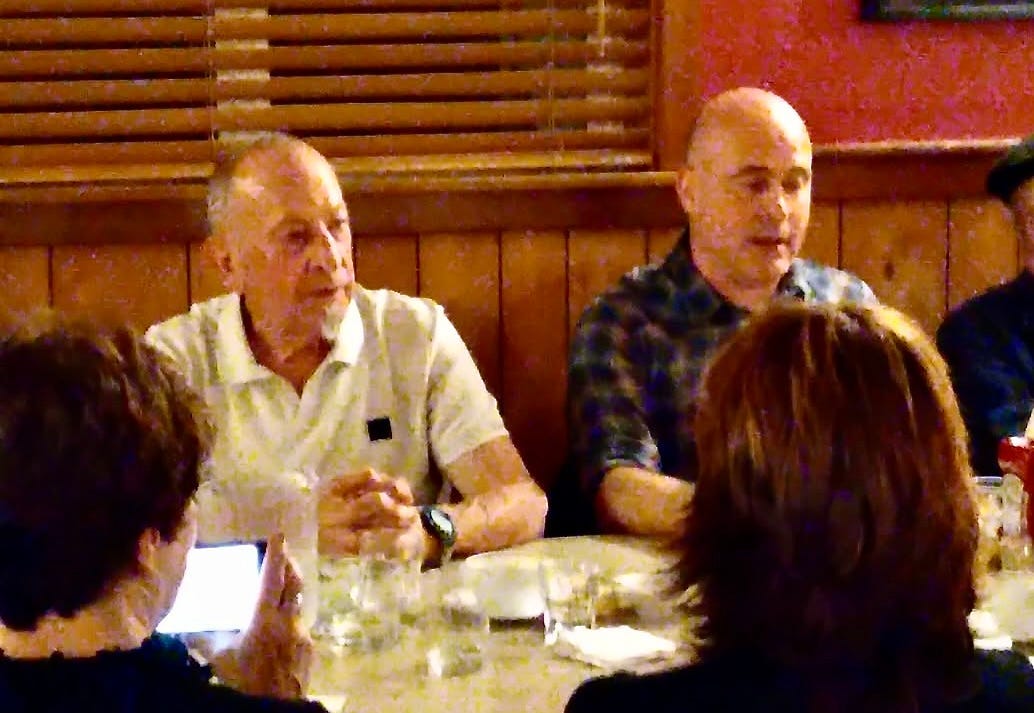
Jeff had studied a bit of Basque/Euskara from classes given by JT’s bartender, Etienne Lekumberry. After a few sessions of the class, I realized my bandwidth for this totally unfamiliar and obscure language was extremely narrow. While I couldn’t understand the story and the wit and humor that brought laughter and applause from the native speakers, I still enjoyed their mellow voices and the cadence of music that supported their lines. Sometimes those lines ran off the end of the music, but no matter. They just kept going until they completed their lines.
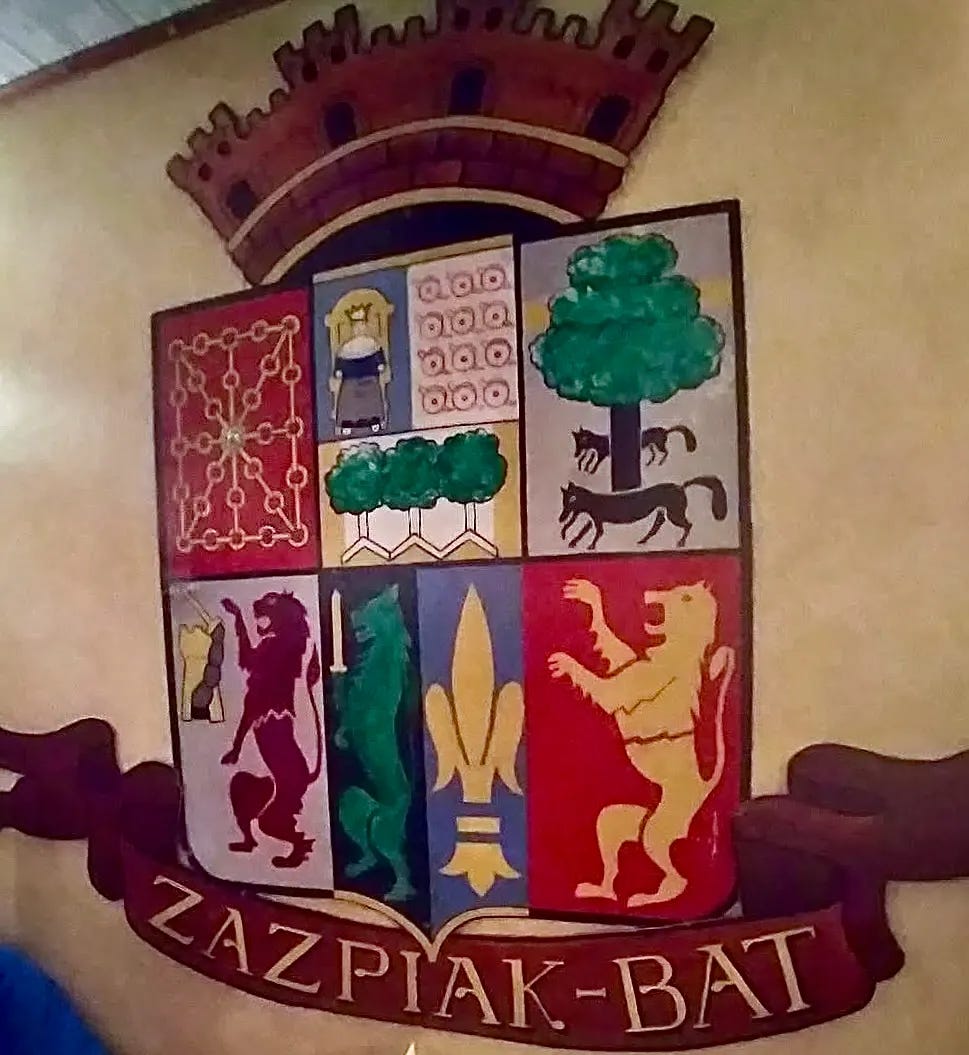
When I look at Euskara in print, there are strange combinations of letters: tx, iak, oa. The last two denote articles and places. A painting of the heraldic shield on the wall above our table contains the phrase, Zazpiak-Bat. Jeff parsed it for me: Zaz - seven, iak - of, bat - one. Of Seven One, a motto that embraces the provinces into one homeland in the Pyrenees.
As the bertsolaris sang in Euskara, the sounds of the words lay gently upon my ear. Without harsh gutturals, it almost hypnotized me. As we drove home, I hummed the folk melody to myself, feeling the tug of age-old oral literature that has borne humanity’s stories for eons. The Basque people have been around for so long, isolated in their mountain realm, that the word for tool also means stone. Bertsolari is a storytelling art form similar to what troubadours and shanachies have used since Homer wrote the Odyssey.
Many times during the recitations, a line was repeated, allowing the guests to join in the song. Jeff informed me it also signaled the end to that particular poem. For about a hour, the men traded back and forth, each adding a line responding to the one just given. At one point, the men seemed to be arguing. Jeff surmised they were baiting each other. No fights or mayhem broke out, though, as everything happened in the spirit of fun and friendship.
After the bertsolaris finished their poems, Mike Bidart, who arranged the event, sang a folksong with a voice as rich and delightful as his two visitors. After his performance, Etienne Lekumberry rounded out the performance with his rendition of Izarren Hautsa, “Stardust” by Mikel Laboa.
While JTs welcomes everyone, such events illustrate how restaurants like this are actually community centers. When young men immigrated from the Basque Country in the early 1900s to tend sheep in the West, hotels like JTs sprung up in towns throughout Idaho, Nevada, and California. As tonight’s guests did tonight, the shepherds sat at long tables, eating communal meals, passing around platters of meat, tureens of soup, stew, and beans, and baskets of fresh bread. After a lonesome summer tending thousands of sheep, their only companion a dog, these men stayed in these hotels to reunite with others from their homeland. Some returned to that sacred place, but many stayed and built communities. Their language and culture continues to be taught to successive generations through organizations like Mendiko Euskara Cluba. The Club’s Facebook page is headed by a photo of their children’s dance group. Likewise, guests from the Basque Country visit their American friends and bring bits of their culture for us to enjoy.
My friend Sharron Bassano, of Leaves on Substack, read this piece and found this link to a Bertsolari contest held in the Basque Country. Thank you so much, Sharron, for adding to this article.
Read more from Sue Cauhape on her page, “Ring Around the Basin”:

If you enjoyed this post, hit the ♡ to let us know.
If it gave you any thoughts, please leave a comment.
If you think others would enjoy it, hit re-stack or share:
If you’d like to read more:
And if you’d like to help create more Juke, upgrade to a paid subscription (same button above). Otherwise, you can always help with a one-time donation via Paypal or Venmo.
What an amazing world we live in. Thanks for showing me this piece of it, Sue.