
On Cooking
Even Jimi Hendrix probably made himself a sandwich once in a while...


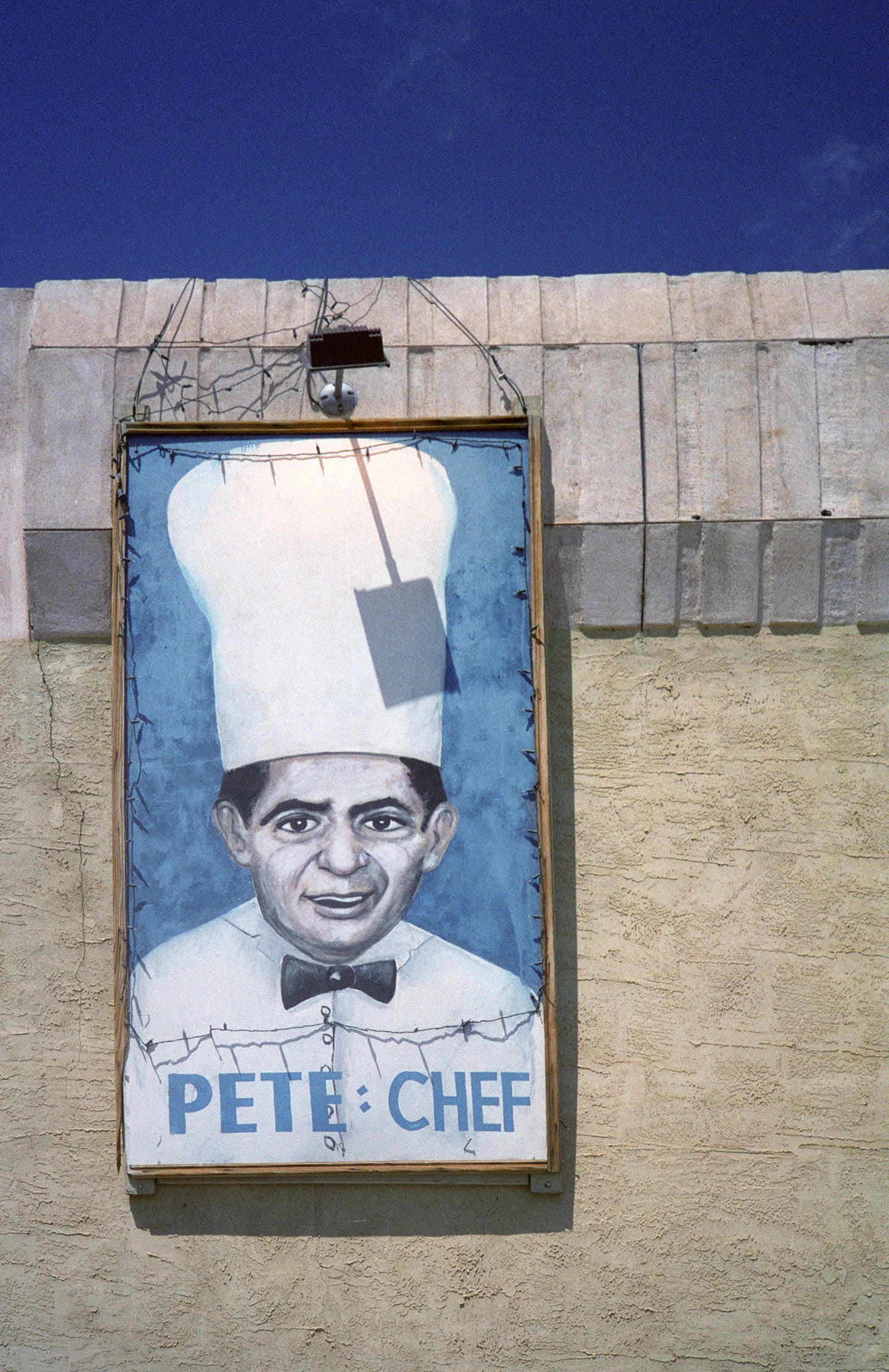
Tonya:
It’s easier to write about cooking while I’m in the kitchen. I can jot down notes while I’m making my red curry, which I’ve been making regularly for at least fifteen years now. It’s one of those things I can make without even thinking. Grating the nubbin of ginger that lives in the freezer with a few spare heads of garlic. Peeling open the cans of the good coconut milk. When one of us has been near Chinatown, then I throw in a bunch of fresh Thai basil from the Bangkok grocery on Mosco Street, but otherwise, I just use regular basil from the grocery nearby, or even occasionally cilantro. This isn’t a fussy dish.
If I have broccoli in the fridge, then it goes into the curry. Carrots. Peppers. If I have tofu, it goes in. But I love it just as well with veggies alone. The coconut creaminess and the complex spiciness of the red curry paste. The light tang from the lime juice. It’s almost a soup, spooned over rice, and it comforts me like a soup. If I were given the painful task of playing chef tonight for a large group, without any preparation, I would inevitably make my curry. It’s as familiar to me now as my pots and spoons. More familiar, actually, because I’ve known this recipe longer than I’ve had these particular pots and spoons.
Funny how the curry is two things to me at the same time. It’s tonight’s big pot on the stovetop, for one thing, but then it’s also the memory of making it a million times before. This version is a cousin to each earlier version. Like the first time I cooked it for my mom and her new boyfriend, over a decade ago, back when he was “my mom’s boyfriend” and not yet “Chris,” who’s become fully integrated into the family. They rented a lake house near my little town in Kansas and I came over to cook in the unfamiliar kitchen. Mom helped me to dice up the onion and the carrots. I remember her surprise when I cut the broccoli down to a pile of little heads and then threw all the stalk parts into the garbage. “You’re throwing all of that stalk away?” She looked horrified. But my first husband didn’t like the stalks, wouldn’t eat them. And now I have a second husband—you—who also won’t eat broccoli stalks, which makes me think there’s something about men and broccoli stalks. Or else something about men, period, that they are accustomed to eating only the parts of things they like.
I used to make this curry with chicken, because I used to eat more meat. For a while, I added a little fish sauce to the curry paste, but then I decided it didn’t change the flavor enough to matter. Then, for a while, I made it as a true soup, with a few cups of broth and with the rice mixed in. It was hard to get the spice level right when it was a soup, so I gave up on that.
Because I’ve made it so many times, the logic of curry is simple to me. Most of the activity is dicing, and then it’s a slow incorporation of the curry paste into the sautéed vegetables, and then the coconut milk. Wilting in the basil at the end, and adding lime juice. It must have all been new to me once, and I can vaguely remember thinking the dish was sort of difficult in the beginning. But I got to know my red curry so long ago, we’ve become old friends.
I could just as easily cook a few other things—broil a salmon filet, make a quick marinara, or maybe sauté white beans and greens. Otherwise, I have to rely on recipes.
My saved folder from the New York Times Cooking section tells me I’ve recently made Broiled Swordfish and Lentils, and Baked Feta with Broccolini (I’ve made the feta twice, actually, in two weeks,) and Creamy, Spicy Tomato Beans with Greens. I’ve made Pearl Couscous with Sautéed Cherry Tomatoes and Roasted Sole with a Spice Butter. You liked all of those things, so I’ll make them again.
But tomorrow, I think I will make Miso Leeks and White Beans. I have the recipe printed out, with a few splatters on it from the last time I made it. This time, unlike last time, I’ll cut the leeks correctly. Now that I know what a leek is; something I didn’t know a year ago. And now that I know what miso is, too, which I only learned a few weeks ago. If I cook the leeks, then we won’t be tempted to go out for pizza. And, God knows, we’ve had enough pizza lately…
Paul:
NOTA BENE - There is NEVER enough pizza, although there is sometimes the wrong kind of pizza. This topic must wait for another, more serious column. Sufficient unto the day is the evil thereof, along with bad pizza.
I must say, though, that this is odd. When you first sent me your piece and I read it - for the usual back-and-forth conversation that we sometimes do - it felt like a different piece to me than it does now. What was the original idea, something about cooking? Was it my idea? Did I say “Let’s write about cooking?” I feel as though you are talking about curry or about my alleged dislike of broccoli stalks (not completely true, but there is a germ of truth, I suppose, in the idea that I completely loathe broccoli stalks.) Anyway, let me compose myself and take a slug of tea.
Okay, that’s better. The first time I read this, I was composing a response in my head that went something like this:
“If you know that Tonya and I live under the same roof and that Tonya enjoys cooking and is an excellent cook, and if you knew my own history of cooking, then you’d agree that I am a fortunate man. I have nothing further to say.”
That is still my response, but I will say more.
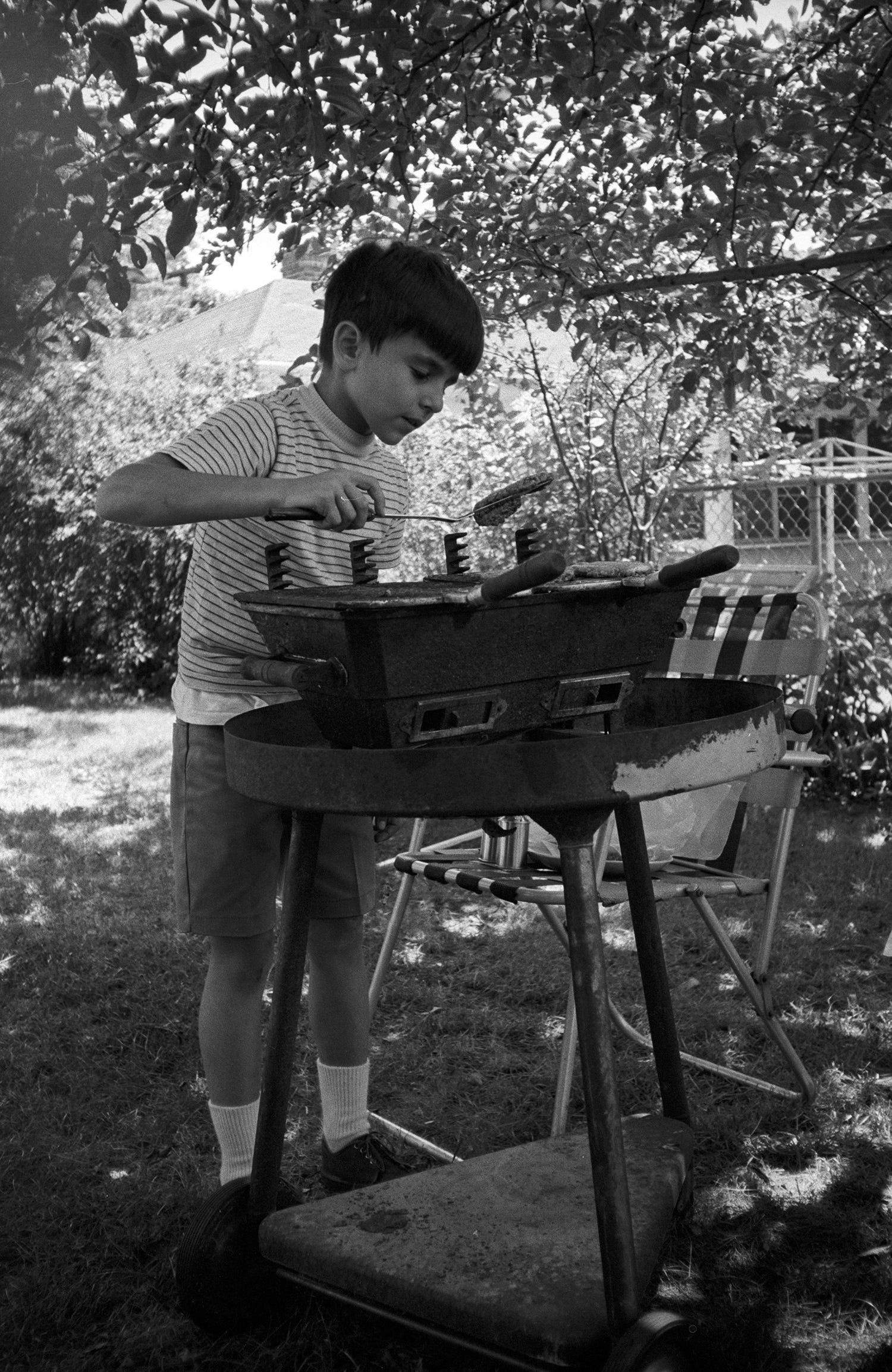
I always liked to cook. From when I was young and had to stand on a box to reach the stove, I enjoyed frying up stuff, blending things, chopping, kneading dough and making crepes. It was a substitute for art, I think. I liked to make things, to see them evolve. Eating, not so much. I still like to make things. I have also learned to enjoy eating. Maybe too much.
I wanted to be a chef when I was 7 or 8, shortly after I decided I did not want to be a priest. Instead, I became a teenaged pothead and my cooking got weird. Strange Dagwood sandwiches at 3 in the morning, consisting of heaps of melted cheese, fried pepperoni, mayonnaise, mustard and oregano. These sandwiches got bigger and bigger until the denouement, when my friend and I got really sick one day after many bong hits and a couple of these sandwiches. I swore them off forever and then veered into industrial-grade canned chile, garnished with onions and peppers and eaten directly from the pot. Kraft mac and cheese was also consumed directly from the pot, preferably with a wooden mixing spoon, preferably the whole package, and preferably while watching some old film on the TV at 2 AM after everyone else had gone to bed.
When I finally got my own place, it was with my first wife. I don’t remember her stance on broccoli stalks, but we probably disagreed on it. I do know that I enjoyed cooking. She read from recipes and could make a good meal, but her cooking was more formal and more consistent. I liked to freestyle it. I had become a master of eggs as a teenager and this carried over into my 20s. If I had died then - and I came close a few times - a proper epitaph could have been “He made a mean breakfast.” From the coffee to whatever else, I made good breakfast food. I also could open a can of chili and make a passable pot of Kraft mac and cheese.
We got divorced ten years later and I was finally on my own. This is when my culinary world broadened. I don’t have time here to elaborate on the sloppy art of bachelor cooking, but feeding oneself is one of those things that should be of interest to all. This is foundational stuff. I remember seeing a photo of John Lennon once with a teapot and it felt intimate. Even Jimi Hendrix probably made himself a sandwich once in a while.
Tonya:
I want to say, before anything else, that this whole thing could take a left turn now and become about the fact that you once wanted to be a priest. Given that you were raised in the Greek Orthodox Church, where the priests spoke entirely in Greek and were, per your own descriptions, formidable to the point of being terrifying, I am so curious to know how little six or seven year-old Paul imagined his future life as a priest would be...
But, to return to the point, yes, we were supposed to be talking about cooking. It’s just such an enormous subject, I needed an entry point. So I took on that individual dish—the curry. And, as I began to write about it, I was intrigued by the idea that food encodes itself directly into memory, possibly more so than the things we see or hear. That taste buds are a direct conduit to the past.
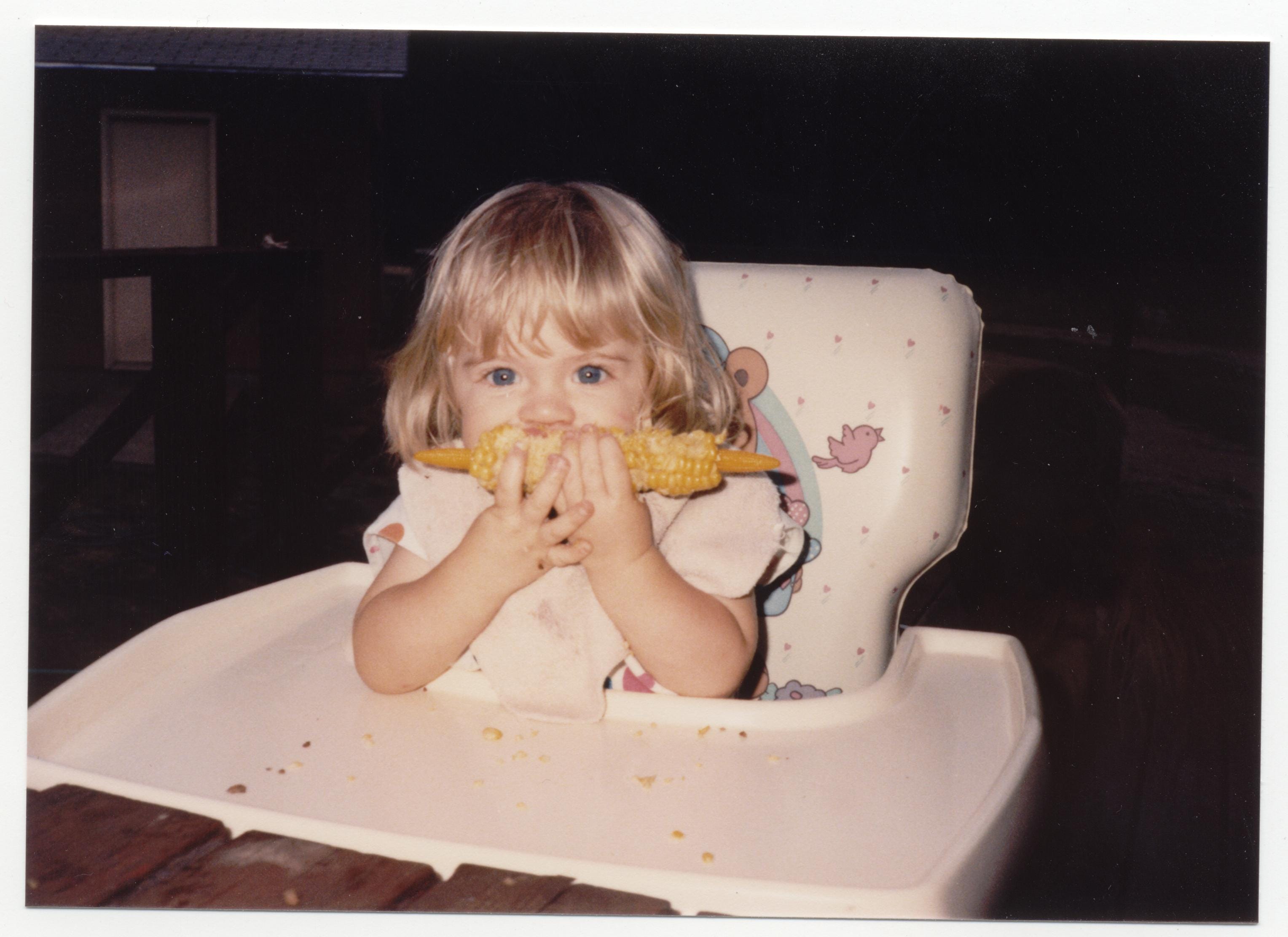
When I was a kid, food wasn’t the same thing. We had plenty of it, of course, and I have deeply ingrained comfort responses attached to things I ate back then. Boxes of rice pilaf. The taste of lemon pepper. But no one in South Dakota was cooking the foods I cook regularly now. The ingredients just weren’t there. We didn’t have farmers markets or ethnic groceries. We didn’t know about good fats. I can remember my father explaining avocados to me when I was in high school: yes, they were technically healthy, but they were just too fatty to eat on a regular basis. We never had them at home. He was concerned about my tendency to snack on olives, but not concerned about the margarine in the fridge or the diet sodas or sugar-free ice cream.
We didn’t know better, not then and not in that place. And my parents had so little spare time to dedicate to cooking, I can’t fault them for relying on spaghetti and canned vegetables and frozen chicken breasts. I am grateful for the few hints I was given, clues to the kind of cooking I would embrace later—my mother’s summer vegetable garden, my father’s chokecherry jam. Fresh lettuce will always remind me of running outside to the garden in the summer. The rare, complex taste of chokecherry will always summon up my father at the stove.
But, probably because I was a little deprived of fine cuisine as a kid, after I got out in the world, discovering food, the whole breadth of what food could mean, I just went crazy about everything. I’ll always remember the first time I made my own guacamole. Or pesto. The first time I smashed a garlic clove in my apartment kitchen in Connecticut or picked my own blueberries.
Foods belong to the places where you discover them. Pad Thai will always hold a little of Chicago for me. Lemon bars will always take me back to pre-school. Fresh dates belong to Westmoreland, California, where you and I bought our first pound of them together. And piñon coffee always summons the chilly mornings in Las Cruces, New Mexico.
Living with you in New York, though, has brought me more food than anywhere else. Escarole. Farro. Japanese sweet potatoes. Persimmons. Chestnuts. Swordfish and fennel and oyster mushrooms from the farmers markets. And yes, of course, your scrambled eggs. Which are superb.
Cooking is so intimate. It’s how we care for ourselves. How we care for each other. I like to cook for you, even when I know I’m making some dishes just a bit healthier than you’d like them to be. I enjoy the creative act. I like the (fleeting) sense of control. Ultimately, I enjoy the food I make. I think I may enjoy it even more than the food I get at restaurants.
Liking your own food is important. Sort of like enjoying your own company. Which does seem like an obvious opening for you to talk about your years of cooking as a bachelor...
Paul:
I just read your whole response but, instead of executing the elegant segue that you set up for me - cooking as a bachelor - I’m going to respond to your points in order, as my brain is a bit cooked from driving all day. Lucky for me, I had excellent company.
I was raised with the Greek Orthodox religion, but it might be too much to say that I was raised “in” that church. We were not diligent churchgoers. Weddings, yes. Funerals, yes. And Easter - that was my favorite time in church and one of my dearest family memories. The pagan way that the Eastern Orthodox celebrate Easter, with the incantations, the chants, the incense and the candles. Leaving the church and re-entering it again, then going for the tremendous feast - always the latest night of the year for me until I was much older.
By Easter Eve, my mom and grandmother would have been cooking for days and, while I did not like all the traditional Greek Easter dishes, I loved the noise, the conversation, the music, and the table atmosphere. That is all now gone and I mourn that world more than I can express. I helped them cook, though, and really enjoyed that, especially making the Greek Easter bread, with the machlep and masticha, which it was my job to pulverize with the mortar and pestle.
I don’t remember why I briefly wanted to be a priest when I was young, but you’re correct - those priests scared the crap out of me. I did not understand a word they said, so they did not inculcate me with whatever they were mumbling and chanting. The costumes? I don’t think so. I am told I went to Sunday school for a whole semester when I was 7 - and there exists a single photo of me in that class - but I have no memory of it. It could be that I recognized their passion, those priests. I didn’t know what they were saying, but I appreciated how they said it.
Also, I never imagined how life would be as a priest or as anything else. I didn’t think it through. This airy attitude would become a problem later in life. I was very much a daydreamer.
Either way, that period did not last long - less than a year. The most significant thing was that I could tell people years later that I had once wanted to be a priest. After that, I wanted to be a chef and if you asked me why, I again could not come up with a good answer. Except that I enjoyed cooking. And that’s enough of a reason.
I’m sorry I was confused at how you used curry as an entree into this piece. I now see what you were doing.
We could start this over again with your most excellent observation that, when you were a kid, food wasn’t the same thing. A seemingly simple statement of fact, but it contains a lot. I might add, “Same here.” I was a child in a nuclear family in the 60s and 70s. For my mom, frozen food and canned food were modern conveniences - breakthroughs - they were not considered lazy expedients or bad nutrition.
Fresh food was harder to come by then. It existed, for sure, but this was the dawn of convenience food. My mom always made sure that we had a protein, a vegetable dish, and what she may or may not have called “a starch,” but that was it. We did not have a microwave or a toaster oven. She liked her pressure cooker and her casseroles. She baked chicken and broiled lamb and hamburgers. We had canned and frozen veggies and fresh ones from the garden in the summer.
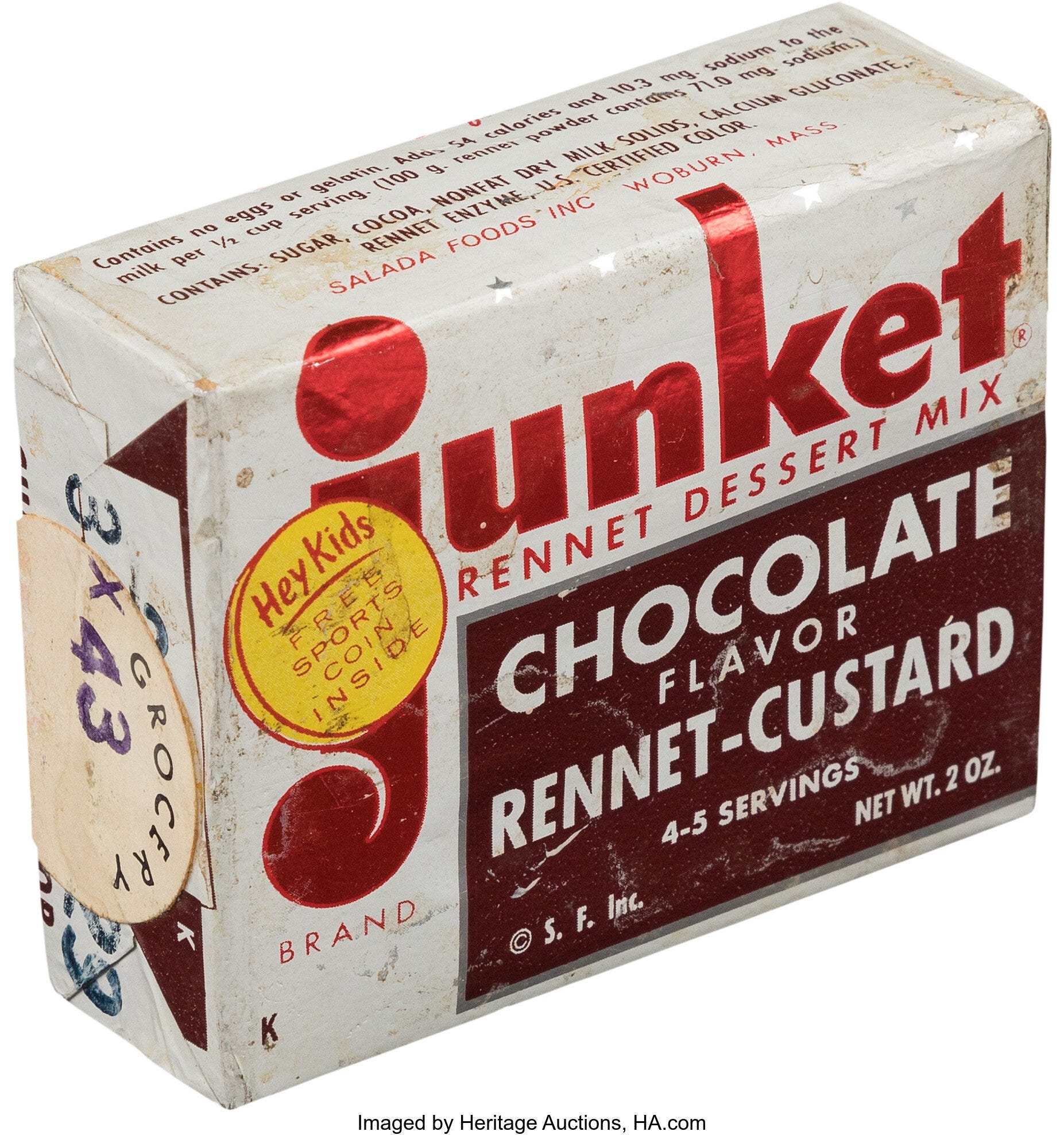
Dessert was usually My-T-Fine pudding or Jello or Junket (a strange, rennet-based custard) or homemade rice pudding. Sometimes, she would make a pressure cooker bread pudding, which was surprisingly good. She kept up with modern cooking and cut recipes out of magazines and off the sides of boxes. And then she would occasionally make one of the Greek dishes that she had learned to cook as a girl. These were exquisite, but she was a full-time mom and homemaker and cooked three meals a day for her family, so convenience often took the day over gourmet food.
By the way, I always love hearing about your mom’s vegetable garden and your dad’s chokecherry jam. Those memories are precious. When I got a bit older and stronger, around 12 or 13, they handed me a pitchfork and I became the guy who turned over the garden every spring. Then, I’d go turn over my grandmother’s garden in another part of Yonkers. More sweet memories.
We never ate out when I was young, but I didn’t feel as though I was missing something. I got to sample the food that my best friend’s Sicilian grandmother made every once in a while and this was a revelation. It was a far cry from my mother’s spaghetti and meatballs. I knew there was other food out there - maybe - but I also didn’t care. I was more into pizza. I still am, actually.
In college, I worked in the dining hall kitchen, but that was institutional food. I did not encounter much exotic food until I moved into the city at the age of 21. I had little money then, but suddenly I was near these amazing places in Greenwich Village - and they were cheap. Mexican Gardens, Taste of Tokyo, Saigon, that Tibetan place near Gramercy Park, the Jewish delis, Italian restaurants, Persian restaurants, and countless others. I began to take for granted that there was great food everywhere. Only later did I learn that was not true. I was in New York City, a crucible of immigrants and a hotbed of international food.
And cooking truly IS intimate, which should be the segue into my years of bachelor cooking, but I have gone on way too long here, taken way too many weird tangents, and will have to talk about that after your next reply.
Tonya:
In this last response, you hit on the main reason why I don’t cook now as often as I used to. New York can make cooking seem silly. We can’t walk the dog without passing a dozen restaurants worth trying. And, even though our neighborhood has become a little homogenous (how many French and Italian small-plate places do we really need?) it’s still only a few extra blocks to get to excellent Thai food, or an all-night Cuban diner, or a Georgian or Israeli or Mexican restaurant. If we wanted to try all the great restaurants in the city, we’d never manage it. We would need to eat six meals a day, every day, for years, and by the time we ate our way through half of them, many would have already closed and new ones would have appeared in their place. There are restaurants nearby, within ten blocks, where we’ve been talking about eating for years and we somehow still haven’t managed to get there. There just aren’t enough meals in a day to justify it.
But, of course, all those restaurants—even the cheapest ones—aren’t as cheap as they would have been a couple decades ago. And even the healthiest of them aren’t healthy enough to eat on a regular basis. So, in order to avoid an early death and bankruptcy, we return to the subject. Back to cooking.
Because the city is equally rich in ingredients. Freshly made pasta from Raffetto’s. Hundreds of cheeses from Murray’s. Today’s baked bread from any of three or four local bakeries. Just this morning I walked over to Abingdon Square’s Saturday farmer’s market and brought home spring onions and cilantro and early zucchini from the Finger Lakes region. Sweet little strawberries from New Jersey. Swordfish from Long Island. In the cupboard, I have herbes de provence from a heavenly little spice shop in the East Village. In the fridge, we have Burgundian cheese and apricot jam from the fromagerie. On the counter are organic dates from the Uzbek grocery on Sixth Avenue.
I realize I’m going on a bit, but I’m still astonished by everything I can find here. I did my best to find fresh food when I lived in Kansas, and what I couldn’t find I tended to grow myself, but I could never have replicated the Thessalonian feta from Queens, cut from the thick spongy block and doused in brine, or the opportunity to try out my tentative “Ευχαριστώ” (thank you) on the man behind the cheese counter. I never smelled anything in my life like the dark, coffee-dusted aisles of McNulty’s Coffee and Tea. I love breathing in the smell of that that shop, while you yell back and forth to the owners about how poorly the Yankees are playing.
Of course, we do also go to Trader Joe’s a lot, because the ingredients in this town will drain your wallet nearly as fast as the restaurants will. But still. But still. I get a lot of joy out of finding food here.
You were the one who introduced me to most of these places—Raffetto’s pasta and Murray’s cheese. The fish counter at Citarella. So, before we forget, I want to hear a little of what cooking was like for you before I took over your kitchen...
Paul:
Ok, your homage to New York City - especially on the morning after this Knicks title victory - got me a little teary-eyed. It’s all true, and it’s all stuff that I might miss were I to move away - something I have been threatening to do for decades. In fact, I just found out that two friends have wagered each other on the odds of my ever moving out. No matter, there is good food everywhere, but I have been spoiled here. One could say that my penance in life would be to move somewhere with horrible food choices. Luckily, I don’t believe in a punishing god.
In response to your question, what was food like in the “before times,” let me try to recall.
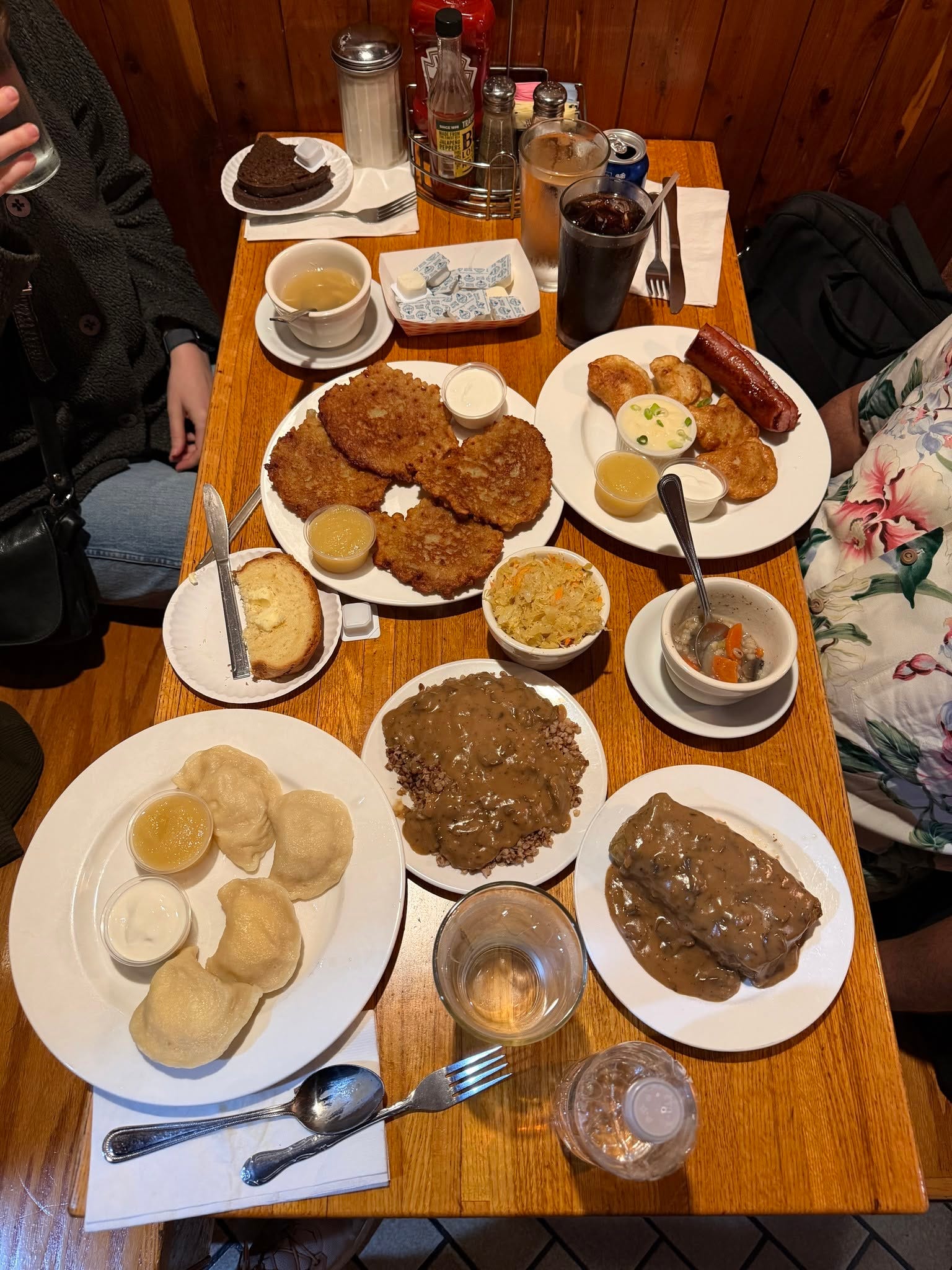
There were many diners for many years. Many of these were the Polish and Ukrainian diners, most of which have vanished, but they were all uniformly excellent. There were many restaurants and trips to takeout places. Of course, that’s also not cooking. Cooking? For years, I’d buy a heap of good ravioli at Raffetto’s every week, make some sauce or do it up with pesto, steam up a bunch of vegetables and douse them with olive oil and fresh lemon juice. Then I would graze on that combo for days. But I ate it cold after the first day. I still like leftover food cold and I know you consider that barbaric, but I don’t mind. At the same time, you have enlightened me to the joys of heating up leftover food.
You brought with you a wizardry of the microwave, toaster oven and large oven that I never possessed, and for that I am grateful. But what else did I eat?
During Covid, I fell into a rut of eating frozen prepared meals from the local health food store. Glop and slop. But I was exhausted all the time during that first year of the pandemic. What did I eat between the cold ravioli phase and the frozen meal phase - a period that stretched for as long as the Triassic or the Cretaceous eras? This is already sounding worrisome.
I ate a lot of what I’ll call “tub food” - stuff you get at stores. It’s already made and you just pop the lid and dig a spork into it. This was especially true during the Econoline era, when my van eating habits bled into my home cuisine. Tortellini in a tub, tuna, egg salad, weird vegetable salads. You name it. If it came in a tub, I ate it.
My kitchen looked like most other bachelor kitchens - a tiny dish rack held one spoon, one knife and one fork. The same bowl and mug got rinsed out and used again and again. The dishwasher that came with this place was used so little that it died. One of my great achievements in this era, let’s call it the Mesozoic - was to replace the dishwasher on my own. This involved plumbing, electrical work and weird shims. But back to cooking.
As with most bachelors, I became quite skilled at cooking eggs. I am a good short order breakfast cook, but I did not do a whole lot of it. I ate yogurt because it’s part of my DNA and my childhood - my Greek grandfather made his own yogurt - and besides, it comes in a tub. What’s not to like? I went through a frozen waffles period. You’re starting to get the idea, right?
At one point, I figured I’d get all healthy, so I bought a big salad bowl and made a few killer salads. Then I put the bowl on a high shelf and did not touch it for years. It remained as unused as my dishwasher. I made the occasional soup and, in the late teens of this century, I began to make some casseroles from recipes in the New York Times “Cooking” section. These were all delicious and I began to freestyle with them.
To jump back in time, I was vegan for a few years in the 1990s and don’t remember what I ate, but I think it contributed to my first kidney stone. My diet was heavy on soy products and I eventually got freaked out - rightfully so - by how much soy I was ingesting. Vegan tub food is not as good as non-vegan tub food. It was pizza that lured me back to the lacto-ovo-pescatarian camp. For many people, bacon is the gateway drug out of veganism. For me, it was pizza.
I remember what I cooked a lot of during my bachelor days - cold cereal, in many and various forms. I cooked a lot of cold cereal and was a wizard at opening those boxes, adding in things like raisins and wheat germ, then pouring in the milk. At the same time, I remember making a snarky, but true, post on social media that stated, “My favorite recipes begin with the words ‘Make a one-inch slit in the overwrap before inserting in the microwave.’” Does Chinese takeout food count as home cooking? Probably not.
I know there was other stuff, but I honestly cannot remember. Maybe there was no other cooking? I do like to cook, but this piece has been a sad-sounding compilation of ersatz pseudo-cooking and sorry excuses. Still, at the end of the day, I am not only here, but I weigh more than I did 30 years ago, so I must have been doing something right. Or maybe not, the more I consider that statement. I used to love baking bread and would like to make more bread, along with my favorite food - blueberry muffins. I should quit writing while I’m ahead.
Tonya, I’m so happy that you took over my kitchen. I cannot tell you how happy I am.
Paul Vlachos is a writer, photographer and filmmaker. He was born in New York City, where he currently lives. He is the author of “The Space Age Now,” released in 2020, “Breaking Gravity,” in 2021, and 2023’s “Exit Culture.”
Tonya Morton is, among other things, the publisher of Juke.
If you enjoyed this post, hit the ♡ to let us know.
If it gave you any thoughts, please leave a comment.
If you think others would enjoy it, hit re-stack or share:
If you’d like to read more:
And if you’d like to help create more Juke, upgrade to a paid subscription (same button above). Otherwise, you can always help with a one-time donation via Paypal or Venmo.
You both sound like you eat healthy, sumptuous food and can get anything to eat within a few footsteps. Where I live, there are a lot of good restaurants, including Thai, Indian, and Cajun. Also, there is an abundance of BBQ, pizza, Chinese/Japanese, and Mexican. In fact, Mexican isn't ethnic in the western states. It's just food. There are regional differences, of course, and in Minden alone, there are half a dozen Mexican restaurants within a mile radius, all hawking different regional styles. Recently, a new road built through town opened up several lots of acreage that became fast-food Heaven ... or Hell depending on your tastes. It's right across from the high school. If those kids go hungry, it's their own damned fault. But let's not forget the local ethnic cuisine peculiar to the Great Basin. BASQUE! When the West opened up to European settlers, they discovered the only "crop" that thrived on these dusty sage-infested valleys was cattle and sheep. Thus, Basque cuisine was introduced with beans, all parts of the cow, and lamb. Lots of lamb. I noticed a distinct dirth of such food in your article. The heavy artillary of western American menus. It's what's for dinner.
oh I loved this. I love food. love to cook it and love to eat it. I have to say, tho, the Little Poland photo - is all the food there tan and brown? count me in!